by Noah J. Edmonds
NOTE: The following paper is a draft of a project being prepared for submission to the Occasional Papers of the Dallas Paleontological Society for a special issue on the Paluxy River. This draft serves as a preprint for peer review, commentary, and editing before submission.
INTRODUCTION
The Paluxy River in Glen Rose, Texas, is a site of notable paleontological significance, renowned for its extensive and well-preserved dinosaur trackways, including prominent ones attributed to the theropod Acrocanthosaurus and the sauropod Sauroposeidon. (Harris, 2022) Beyond trackways, the river has continued to intrigue researchers with its exceptional preservation of Lower Cretaceous paleoenvironmental features – such as potential evidence of swimming dinosaurs and what some interpret as a theropod egg nest, among other notable finds. (Farlow et al., 2015; Kuban, 2023)
The site has also drawn attention for alleged “out-of-place” discoveries, most famously the so-called “man-tracks” – claimed human footprints preserved alongside dinosaur tracks, now widely recognized as misidentified metatarsal theropod tracks. (Kuban, 2022b) While these claims have received the most attention, numerous lesser-known anomalies continue to circulate within alternative paleontology communities, often without adequate critical assessment. Given the renewed interest in promoting the Paluxy River as a hub for anomalous finds (Edmonds, 2025b; Rakowsky, 2022), this paper catalogs and evaluates the most frequently cited paleo-anomalies that have been overshadowed by the “man-tracks”. The aim is to provide a reliable reference for researchers and enthusiasts, while also countering the resurgence of pseudopaleontological narratives of the Paluxy River valley.
Keywords: Paluxy River, paleo-anomalies, pseudopaleontology, alternative paleontology, pseudoarchaeology, Texas Cretaceous fossils
“BIG CAT” TRACKS (1930s and 1940s)
Reference to large cat track fossils (usually claimed to be Smilodon) from the Paluxy River dates back to the 1930s and 1940s, with the earliest mention being made by Al Berry and Jack Hill in 1938. They claimed that they had traveled to Glen Rose to collect both human and cat tracks, though numerous individuals suspected these prints to be carvings (possibly by known track carver and Glen Rose resident, George Adams). (Kuban & Wilkerson, 2010)
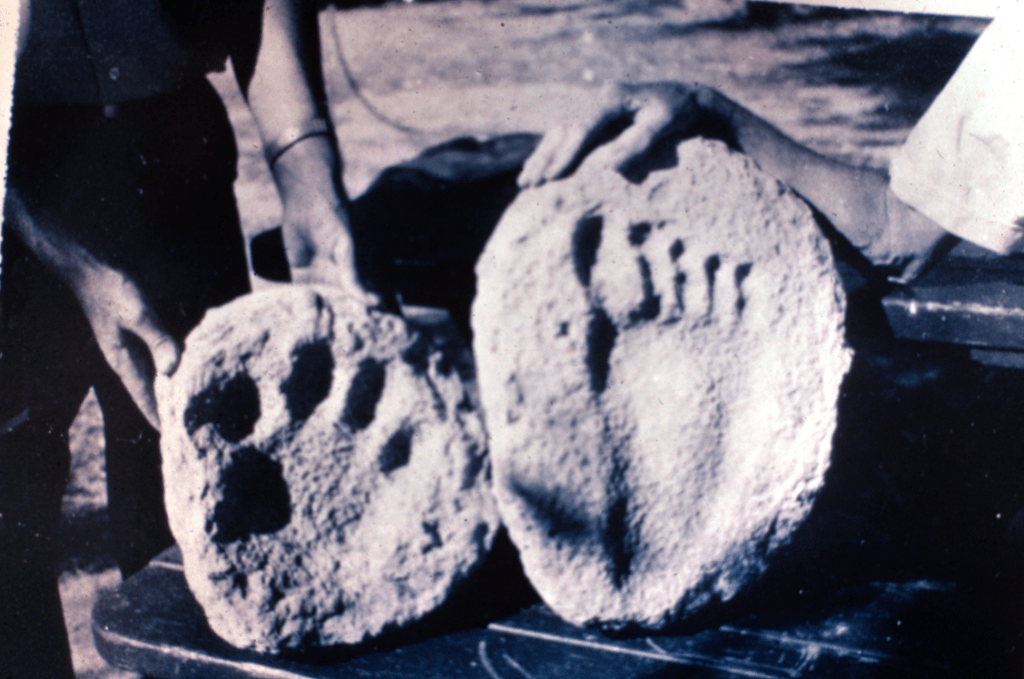
One notable “cat-track” was owned by Clifford Burdick (Fig. 1), an early creationist associated with George McCready Price and a member of the Deluge Society. One or more of these tracks was housed at Columbia Union College (now Washington Adventist University) in Takoma Park, Maryland. (Hayward, 2020; Weber, 1981) One of the tracks is currently on display at Carl Baugh’s Creation Evidence Museum in Glen Rose, Texas (Fig. 2), although no details are provided regarding where or when the track was discovered.1
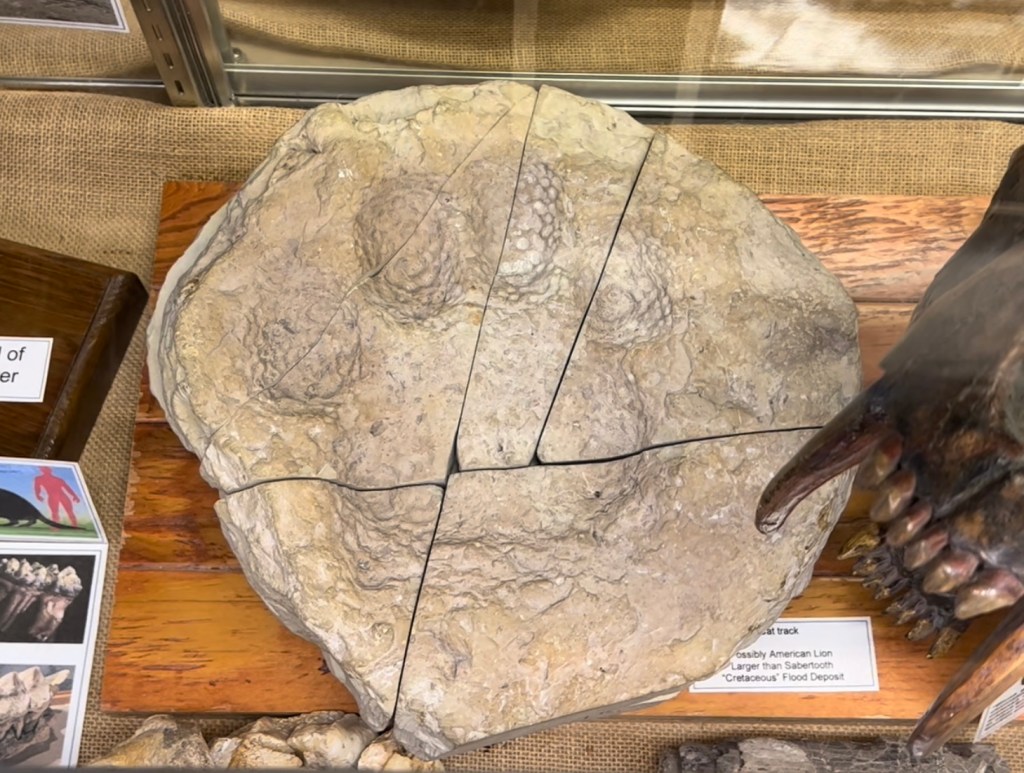
Out of the few Paluxy cat tracks that have been photographed, all exhibit significant anatomical inaccuracies and show clear evidence of chisel marks within, rather than outside, the track impression. Before 1975, attempts to cross-section Burdick’s cat track yielded inconclusive results due to the mottled limestone in which it was embedded. However, in one of the earliest critical studies of the Paluxy anomalies, Weber and Neufeld reported that one of the tracks at Columbia Union College was definitely a carving after cross sectioning revealed the absence of granular compression beneath the impression – a telltale sign of a carving. (Neufeld, 1975; Weber, 1981) The cat track displayed at the Creation Evidence Museum mirrors the same stylistic errors and carving marks found in the tracks analyzed by Neufeld in the 1970s. (Armstrong, 1989) Above the exhibit, Baugh displays a photograph of the track’s cross section, claiming that compression lines validate its authenticity. (Fig. 3)
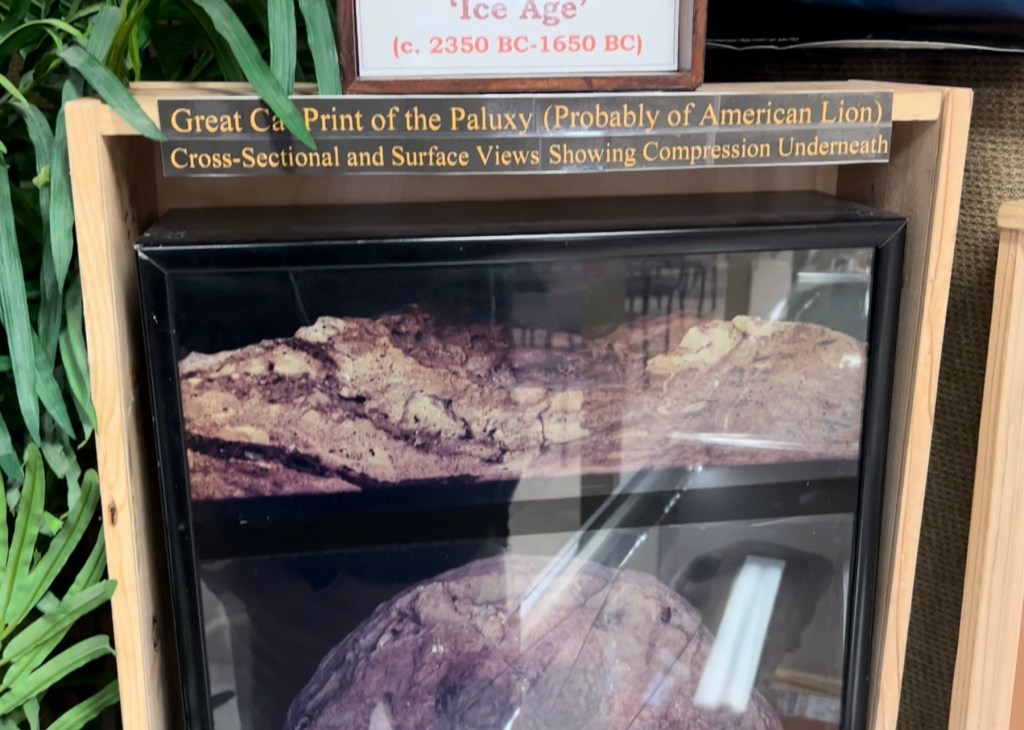
However, close examination reveals that these “compression lines” extend through multiple layers of the matrix, far beyond the track’s boundaries – most likely a result of the same limestone mottling that prevented Burdick’s track from being authenticated.
Considering the known carvings, anatomical errors, chisel marks, and flawed compression evidence, no positive evidence for Smilodon tracks in the Paluxy’s Cretaceous riverbed has been presented. As of this writing, the whereabouts of the variously attested cat tracks remain unknown. The only remaining “Paluxy cat track” is the carved specimen currently displayed in the Creation Evidence Museum in Glen Rose.2
HUMAN SKULLS, VERTEBRAE, AND SACRUM (1970s, 1980s)
In the 2023 re-release of Cecil Dougherty’s Valley of the Giants, a photograph purportedly shows several human vertebrae, a human sacrum, and a human skull discovered near sauropod tracks in the Paluxy River. (p. 43) (Fig. 4) However, these “remains” are just ordinary rocks that bear no resemblance to human remains.

Dougherty includes photographs and references to Rex Gilroy (pp. 43, 68), an Australian cryptozoologist who spent much of his life promoting fringe archaeology and collecting supposed hominid remains from his private excavations. He believed that hominids have a history stretching back seven million years and that humanity first emerged in Australia, though he was most well known for his advocacy of the Yowie, a creature from Australian Aboriginal folklore similar to the North American Bigfoot, which he theorized to be a late-surviving Homo erectus. (Gilroy & Gilroy, 2016; 2020) In his “relict hominid” research, he collected and displayed a variety of “hominid skulls” that he claimed to have unearthed. Upon examination, however, it is immediately clear that these “skulls” are just rocks with two or three indentations, loosely interpreted as eye sockets and a nasal foramen. (Gilroy, 2006; 2008; 2023; Smith, 2024) While it’s unclear to what extent Dougherty and other Glen Rose residents subscribed to Gilroy’s ideas, with Dougherty advocating a young Earth and recent humanity and Gilroy the exact opposite, many of their views align, including the past existence of giant humans that Gilroy believed to be a giant variant of Homo erectus, the discovery of giant hominid tracks in out-of-pace stone, and the promotion of large panther or cat track casts, much like those supported by early Paluxy man-track researchers. (Gilroy, 2011; 2021)
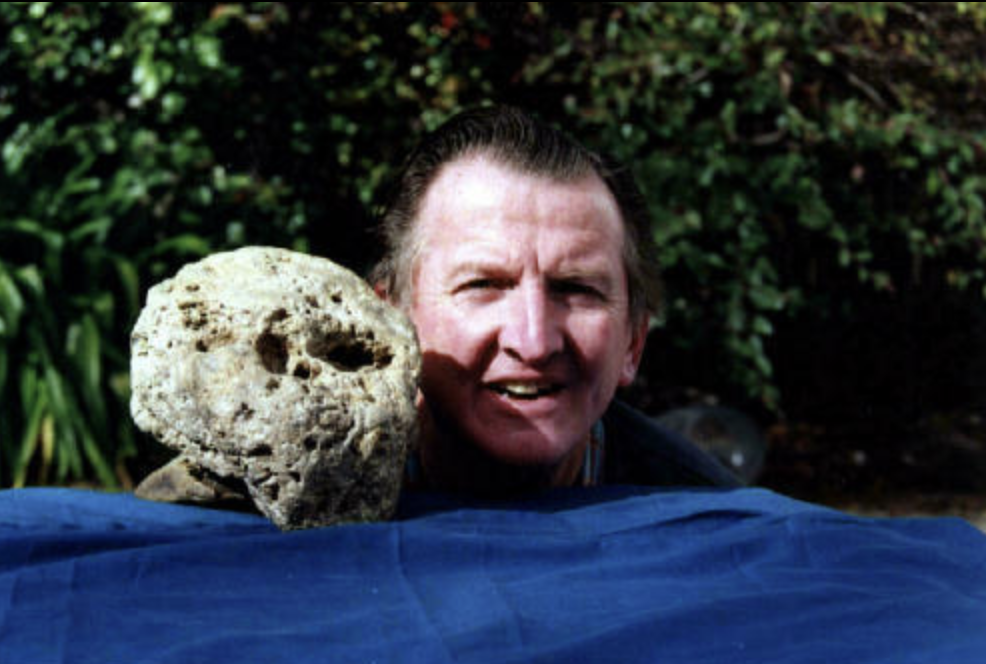
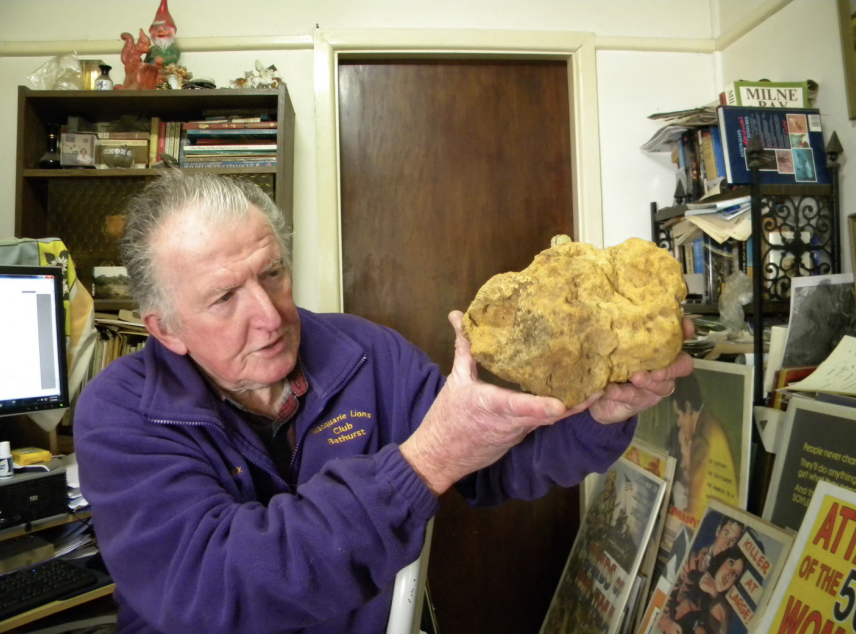
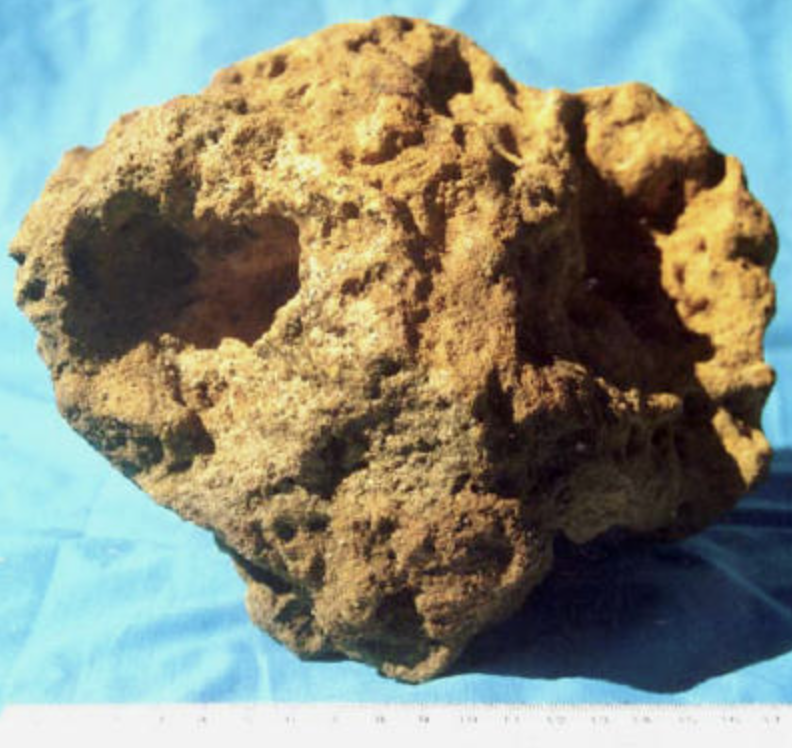
No specific references to Gilroy appear in any other pro-anomalistic works on the Paluxy, leaving it uncertain whether Dougherty simply adopted Gilroy’s method of finding rocks that could be humanized in the right light, or if Gilroy himself visited Glen Rose and had a direct hand in making the findings or telling Dougherty that the rocks were human remains.3 Regardless, the rocks Dougherty displayed as human remains are clearly just misshapen stones with no meaningful resemblance to the bones they are supposed to be. As Dougherty was the only person to document them, there’s no record of their current whereabouts. All five pieces are now lost to history, much like the Paluxy cat tracks.
Later, Carl Baugh would go on to present two alleged skulls, one of a feline and one of a human infant (or possibly a primate), at the Northcoast Bible-Science Association’s 1984 National Bible-Science Conference in Ohio. He claimed that both skulls had been recovered from the Paluxy River, and had had the skulls sectioned in order to demonstrate their internal structure for verification. However, Frank Zindler and comparative anatomist Emmanuel Sillman examined the skulls in person and confirmed that, exactly like Dougherty’s skulls, “…the objects bore only a vague resemblance to genuine skulls. The ‘homind skull’, for instance, was a rock with two different sized pits that the creationists interpreted as orbital openings. Zindler identified the rocks as weathered nodules of silicified limestone.” (Schadewald, 1984, p. 113) While these “skulls” would later be referenced by Ron Hastings in a 1992 report on the Paluxy anomalies in the Bulletin of the Houston Geological Society (p. 40), they have seemingly joined Dougherty’s in the clouded annals of history, as Baugh does not mention the skulls in any of his published works, nor does he display either of them in his museum.
BEAR TRACK (1970s, 1980s)
In the early 1970s, Stan Taylor released the film Footprints in Stone, arguably the first widely distributed piece of media to popularize the Paluxy human track claims. It laid the foundation for the subsequent work of figures like Carl Baugh and John Morris and their human track interpretations throughout the 1970s and into the 1990s. One notable moment in the film is when Taylor points out what he labels as a fossilized bear print in a section of the Paluxy River known as the State Park Ledge, situated above the main track layer in Dinosaur Valley State Park. (Fig. 8) (Kuban, 2022a)

This interpretation gained further traction when it was featured in John Morris’ 1980 book Tracking Those Incredible Dinosaurs (pp. 97-98, 137, 158, 228-229, 233), which became the central text in promoting the Paluxy “man-track” claims. (Kuban, 2022a; Godfrey, 1985) However, the “track” only superficially resembles an actual fossil bear print, and several critical issues undermine its authenticity.
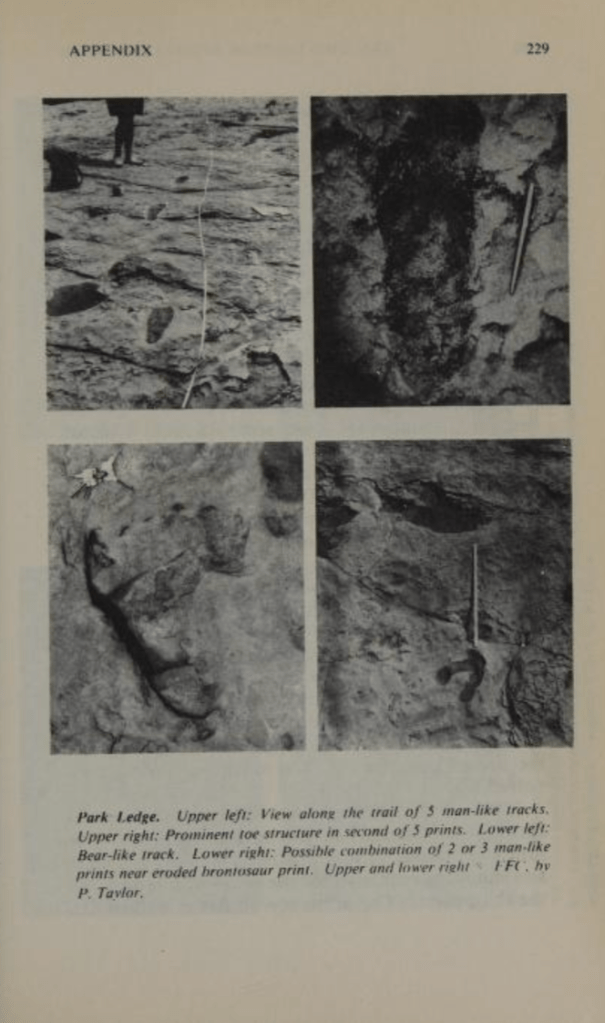
First, the State Park Ledge is not a track-bearing stratum. While numerous dinosaur tracks have been found elsewhere all throughout the Paluxy, no legitimate tracks – human, dinosaur, or otherwise – have ever been found in the Ledge’s layer. This raises the question: why would bear tracks, completely out of place geologically, with no notable sequence or accompanying evidence, be preserved in isolation on this shelf? (Godfrey, 1985) Further, the State Park Ledge’s hard, dense limestone and wackestone is well known for its susceptibility to Karren erosion due to its uneven calcareous rock layers. Over time, rainwater seeps into the limestone, creating elongated cavities and depressions through mineral dissolution. These features, which often form along fractures (one of which is visible in the upper half of the “track” as seen in both Figs. 8 and 9) can easily take on shapes that resemble footprints, which is one of the reasons why the Park Ledge is popular for claimed human tracks. (Cole et al., 1985; Kuban, 2022a)
Taylor identifies five depressions as “claws” in the film, yet a closer inspection reveals six or even eight depressions, depending on which ones are counted. These additional depressions, particularly those on the far right of the “track” are spaced too far apart from the main impression to be explained by known bear anatomy, along with a “jutting” deformation section not consistent with actual tracks left by bears. These irregularities suggest that what Taylor and Morris identified as claw marks are actually depressions resulting from differential erosion, where softer rock layers beneath harder, more resistant sections are undercut, leading to a pitted surface. (Cole et al., 1985) This process likely contributed to Taylor’s initial misidentification, and was officially retracted when he removed his film from circulation after he became convinced that there were no human tracks in the river in the 1980s.4
FOSSILIZED HUMAN FINGER (mid-1970s, mid-1980s)
Although this item was allegedly discovered in the mid-1970s, it wasn’t until the mid-1980s that Carl Baugh acquired it and began displaying it at his Creation Evidence Museum. (Creation Evidence Museum, 2013) The story behind its discovery is murky and inconsistent. Baugh currently vaguely claims that it was found “near” the Paluxy River, although he and Clifford Wilson have both claimed that it was found in the Cretaceous layers of the Paluxy itself in 1991 (Plate X, pp. 169-170), while Don Patton (one of Baugh’s associates) asserts it was located on the riverbank (n.d.). Helfinstine & Roth (2007, p. 32) stated that it was unearthed miles away from Glen Rose on private property near Chalk Mountain, an unincorporated community in southwestern Somervell County. The most recent “official” version of the story on the Creation Evidence Museum’s website is that it was “found loose in a gravel pit” in a Cretaceous quarry. (Creation Evidence Museum, n.d.; 2013; Kuban, 2012)
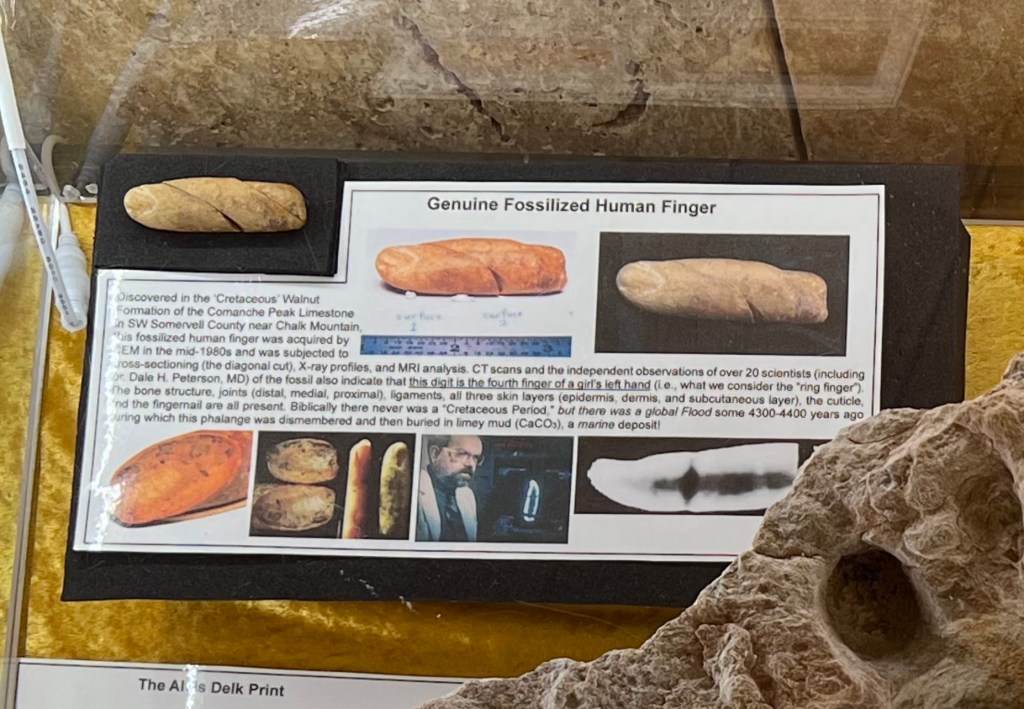
Despite these conflicting accounts, Baugh has asserted that the specimen is the fossilized remains of a human finger, going so far as to claim it is “the fourth finger on a girl’s left hand”. (Creation Evidence Museum, 2013) However, looking at the find through the lens of general human anatomy yields several glaring inconsistencies with this interpretation. For instance, the “fingernail” is narrower at the proximal end than the distal, which is anatomically reversed. A furrow runs along the length of the specimens surface, a feature not found on real fingers. Most tellingly, there are no signs of knuckles, bones, ligaments or any other defining characteristics of an actual human finger. (Kuban, 2012) Further, a June 1992 paper published by Ronnie Hastings in the Bulletin of the Houston Geological Society identified the “finger” more specifically as a loose iron oxide nodule. (p. 39) It’s worth noting that spindle-shaped concretions that resemble the finger nearly identically have been discussed in the geological literature since, with several depicted in a 2012 Sedimentology paper discussing how such concretions form. (Loope et al., p. 1774, Fig. 4)
The conclusion that this object is just a rock or concretion that superficially resembles a finger was seemingly confirmed in 2012 when a woman contacted Glen Kuban seeking help in recovering the item, which she had loaned to Baugh under the impression that it would be returned. Baugh kept it and continued to display it in his museum, where it remains to this day. (Fig. 10)
“YOUNG” CRETACEOUS WOOD (1978-1989)
Reports of anomalously young Cretaceous wood being found in the Paluxy River date back to the 1970s, with Fred Beierle claiming the discovery of a “carbonized branch” embedded in the Cretaceous rock of the riverbed, as cited by Helfinstine & Roth. (2007, p. 125) The branch was first found by Wilbur Fields and later reported by Beierle in a 1979 issue of Creation Research Society Quarterly, where he provided photographs of the branch. (Fig. 11) The branch was thought to be positive evidence for young-Earth creationism because it demonstrated a recent age via carbon dating. (Beierle, 1979, pp. 87-88, 131)
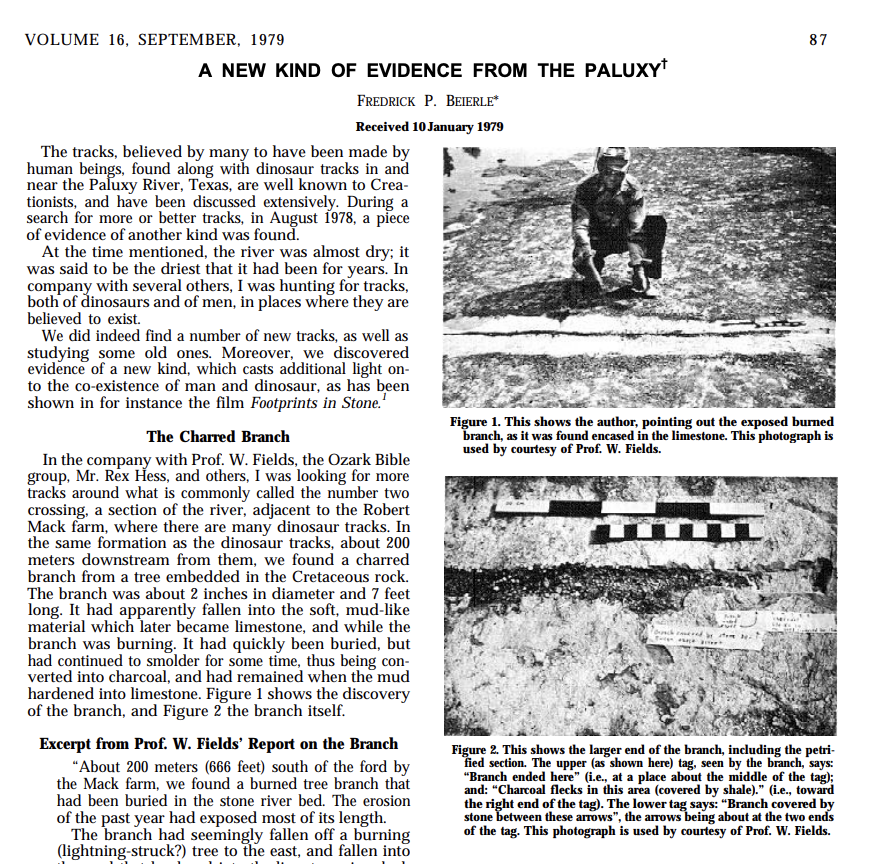
Glen Kuban, based on the photographs and descriptions of the branch originally published by Fields in Paluxy River Exploration and later editions of Beierle’s Man, Dinosaurs, and History concluded that the find was not a carbonized tree branch as Beierle claimed but was likely plant material from a horsetail, club moss, or reed – plants commonly found in Cretaceous deposits. He also noted that the fossil was actually black in the river (not just in the photographs) and appeared to have the charcoal-like characteristics of a genuine plant fossil. Moreover the segmented nature of the fossil was consistent with certain Cretaceous plant groups, indicating that it was a legitimate carbonized plant fossil.5
Based on these observations, it is likely that Fields and Beierle found a branch of fusain, or fossilized charcoal. The material is silky-matte black and easily crumbles into a charcoal powder that blackens the fingers, which matches both the appearance of the branch in the photos provided (Fig. 11) as well as the description of crystalline structures within the branch – calcite and closely related carbonate minerals such as dolomite or siderite have been reported filling and/or coating fusain. (Dai et al., 2018, Fig. 4D) This would also explain the “stone bubbles” noted by Fields and Beierle, since botryoidal/globular calcite deposits have been documented in association with limestone.6 (Blome & Albert, 1985; Yoshida et al., 2018) The authors had samples of the branch tested by the University of California, Los Angeles, and reported that the sample returned a date of only 12,800 +/-200 BP despite being recovered in a Lower Cretaceous layer old enough to contain dinosaur tracks (around 110 Ma BP). (p. 88)
The issue with the conclusion that the branch’s carbon had to be intrinsic and thus reflect a true age is that it doesn’t account for the fact that fusain is porous and easily able to adsorb material from its surroundings. Frederick and Beierle state that the branch was exposed in the river for nearly a year before it was found (p. 87), which would have put the branch into contact with water and soil seepage carrying dissolved organic molecules from plants and soil like humic and fulvic acids that can adsorb onto every micropore of fusain much like a Brita filter grabbing impurities. Lab tests show that biochar can soak up >100mg of humic acid per gram, and is able to reach equilibrium for humic uptake in less than a day, meaning that at least the outer layer of the sample would likely have been loaded with modern carbon contamination. (Dudlo et al., 2024; Li et al., 2022) If even just 20% of the carbon atoms in the test sample were modern, the calculated age would collapse towards the present.
| % modern C added during sampling/pre‑treatment | Apparent ¹⁴C age that a “dead” (>50 ka) sample will yield |
|---|---|
| 5 % | approx. 24 ka |
| 20 % | approx. 12.8 ka |
| 50 % | approx. 5.7 ka |
Usually, AMS labs use an acid-base (ABA) wash to dissolve carbonates and rinse humics. It works well on recent camp-fire charcoal but struggles with fusain which can have its pores clogged by clay, calcite needles, biofilms, etc. A stricter protocol like hydrogen pyrolysis or acid-base oxidation-stepped combustion (ABOx-SC) oxidizes the sample twice and then steps the combustion temperature, but that is time-insensitive and not always applied unless a Cretaceous age is suspected. (Bird et al., 2014; Wood et al., 2012) However, this is not likely since Helfinstine and Roth themselves indicate that the strata of a number of their finds were purposefully concealed from the labs they had the tests conducted at to hide their “evolutionary” assigned ages. (2007, p. 128) This was done out of worry that the labs would no longer collaborate with them if they were to find out the intent of their experiments, to the extent that they often did not even report the lab numbers associated with the samples dated. (Lepper, 1992, pp. 2-6; Stafford, 1992) As such, external verification is incredibly difficult to obtain for these samples, and given the likely contamination in the first sample that couldn’t be accounted for due to this secrecy, there is no good reason to believe that “young” out-of-place Paluxy wood samples call conventional geochronology into question.
June 2025 Draft Note – Helfinstine and Roth (2007, pp. 128-129) report that between 1978 and 1989, numerous samples of “carbonized” wood from the Paluxy returned dates younger than 40,000 BP, but only published the results in a private creationist conference that is not archived or accessible online (The Proceedings of the 1992 Twin-Cities Creation Conference held at Northwestern College, now University of Northwestern St. Paul). I was able to find a bound copy of the proceedings on Ebay, and will be able to break down the case for these other samples when it arrives. However, another creationist paper on the Paluxy tracks from 1990 published in the Proceedings of the International Conference on Creationism may acknowledge that a number of these samples were contaminated with modern carbon.
HUMAN HANDPRINT (1982)
In their book Dinosaur: Scientific Evidence That Dinosaurs and Men Walked Together, Carl Baugh and Clifford Wilson report the discovery of what they claimed to be the imprint of a human right hand at the McFall site (one of Baugh’s primary work areas in the Paluxy where he had found many of his “human” tracks) during their initial excavations in June 1982. (1987, pp. 46-47) A photo of the print they provided (Fig. 12) only reinforces observations made by those who saw it in person: the “handprint” is nothing more than “…a shallow and ambiguous feature on a coarse and friable surface and attracted little attention even among Baugh’s followers.” (Kuban, 2006)
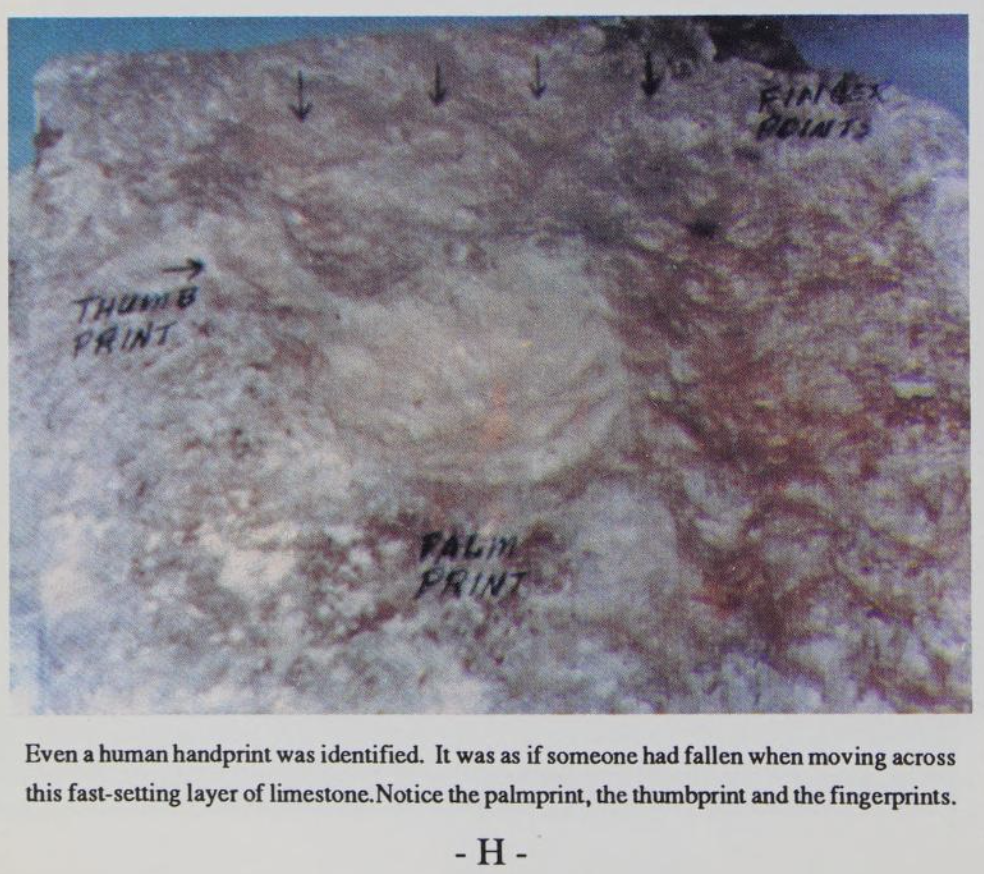
The lack of attention from the community seems to have extended to Baugh himself, as by October of the same year he could no longer recall the exact location of the original “handprint”. In fact, he mistakenly identified a different feature located three feet away as the handprint in front of someone who had been present when the original was first “identified”. When this was pointed out, Baugh doubled down and said that the new marking was the handprint, not the original one. (Hastings, 1985) There’s nothing about the find that suggests it is a genuine human fossil imprint. It is ambiguous and indistinct to the point that Baugh himself forgot what it looked like, and was never properly documented.
This item shouldn’t be confused with another handprint that Baugh promotes that is currently on display at the Creation Evidence Museum. That print was purportedly discovered in 1995 in the Pennsylvanian sandstone of Palo Pinto County, Texas, and is widely considered an embellished carving rather than a genuine fossil. (Kuban, 2006)
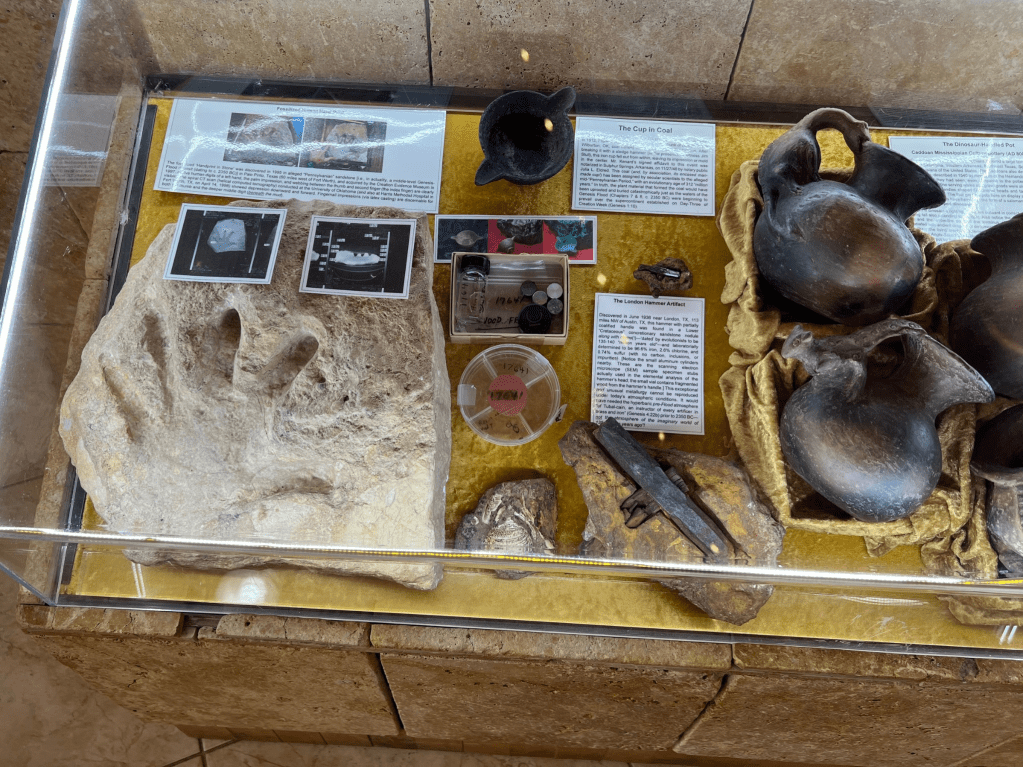
This confusion persists even among Baugh’s own in-group, given the contradictory histories of the print. The official description was added to the museum by David Bassett in the 2020s to give an accurate record of where the print came from – however, in his book Unlocking the Mysteries of Creation, young-Earth creationist Dennis Petersen claims that the print was recovered from the Glen Rose Formation in the late 1990s (2012, p. 161), and Helfinstine & Roth say that it was found in Cretaceous limestone in 1997.8 (2007, pp. 43-44, 50, 113)
PANTHER CAVE GIANT HUMAN SKELETON (1980s)
This is one of the most enigmatic Paluxy anomalies, partly due to the information vacuum around it. The first publication to discuss human remains being excavated from the Paluxy River comes from a 1949 paper published by the eccentric Glen Rose native and well-known archaeologist Ernest “Bull” Adams in the Bulletin of the Texas Archeological and Paleontological Society, where he discussed excavations performed at Panther Cave, a small alcove off the Paluxy well known to locals since the 1800s. (Gosdin, 2005, p. 48) The paper reports the recovery of disarticulated human remains, mostly skulls and femora, that he identified (with confirmation from the Smithsonian and National Geographic Society) as the remains of tenth-century Indigenous peoples of the Southwest. (Adams, 1949, p. 19; Gosdin, 2005, p. 47) Due to Adams’ enigmatic and nonconformist style of research, this was the only official reporting of human remains found in Panther Cave I could find – any others that would be uncovered in subsequent decades would be subject to informal collection.
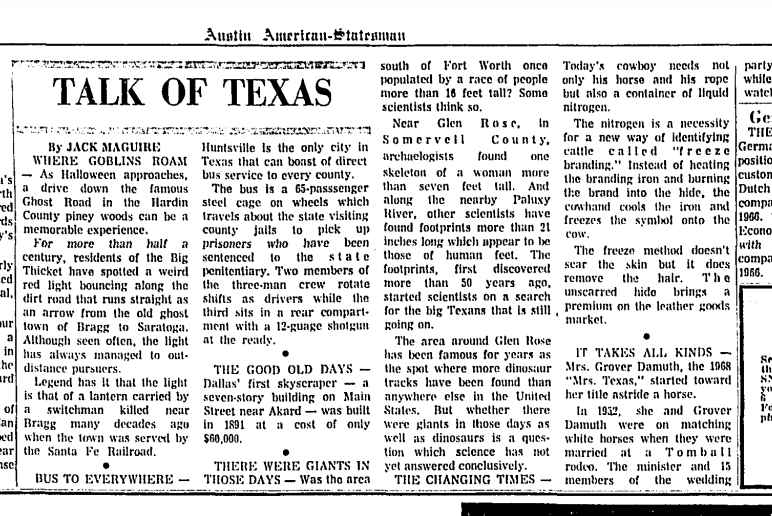
Over the decades, the Panther Cave remains began to permeate throughout Texas’ folklore, whether based on the initially excavated remains from 1949 or others recovered later, I haven’t been able to determine. The earliest reference to “giant” remains being found there comes from a 1968 article by reporter Jack Maguire in the Austin American-Statesman, which claimed that a “skeleton of a woman more than seven feet tall” had been uncovered in the Glen Rose area. (p. A5) Maguire was the first to introduce speculation that the skeleton might be linked to the then-thought-to-be human footprints in the Paluxy riverbed . (Fig. 14)
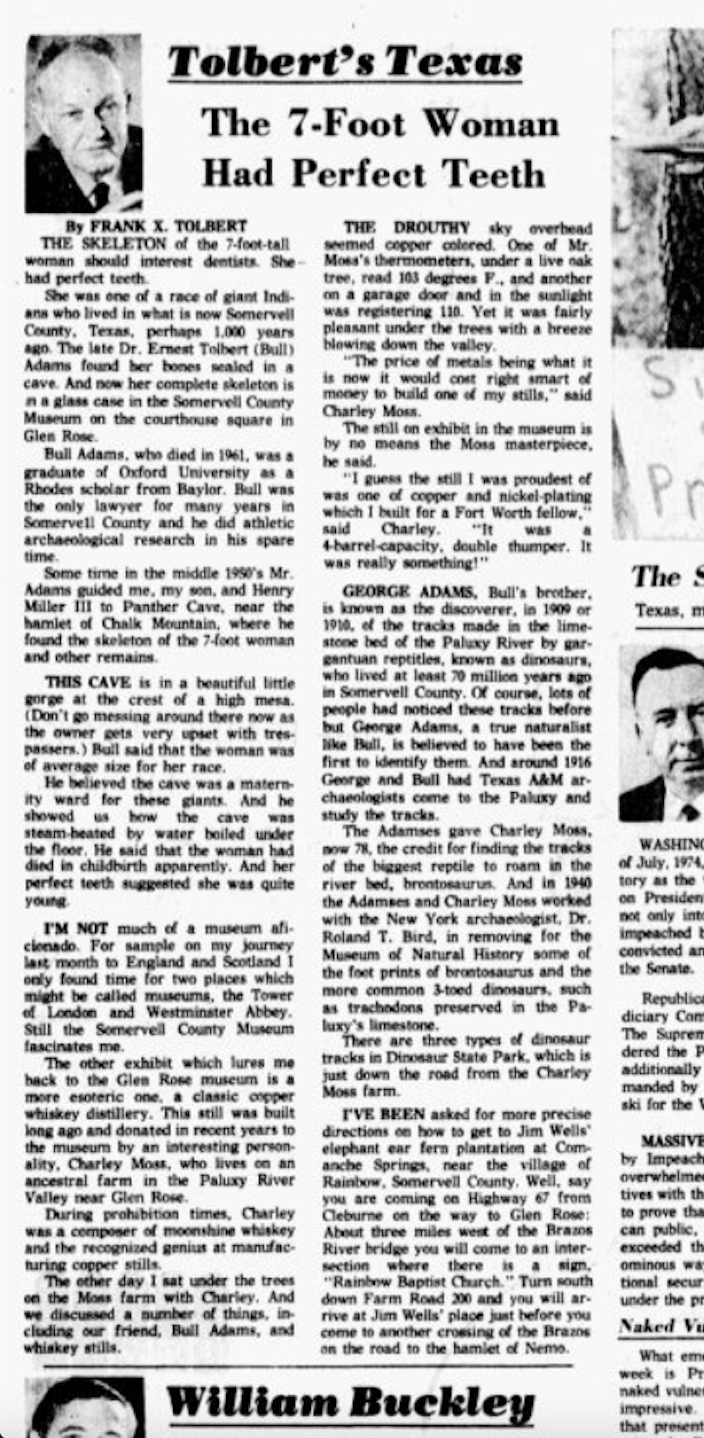
Then, a little over half a decade later in 1974, the story emerged again when journalist and historian Frank Tolbert mentioned the skeleton in an article for the Dallas Morning News. (p. 15) He noted that Adams himself identified the skeleton, discovered in Panther Cave, as having belonged to a Native American woman who was over seven feet tall, and that it was at that time on display at the Somervell County Museum in Glen Rose. (Fig. 15) Tolbert’s article would go on to be the main source cited by later paranormal and cryptozoological authors who thought the skeleton was proof of an ancient race of giants, such as Brad Steiger’s 1979 Worlds Before Our Own (p. 109), and likely inspiring other derivative works in the same genre such as Philip Rife’s 2001 The Goliath Conspiracy (p. 68) and 2013 Bones of Contention: Uncovering the Hidden Truth about (sic.) America’s Lost Race of Giants (pp. 116-117).
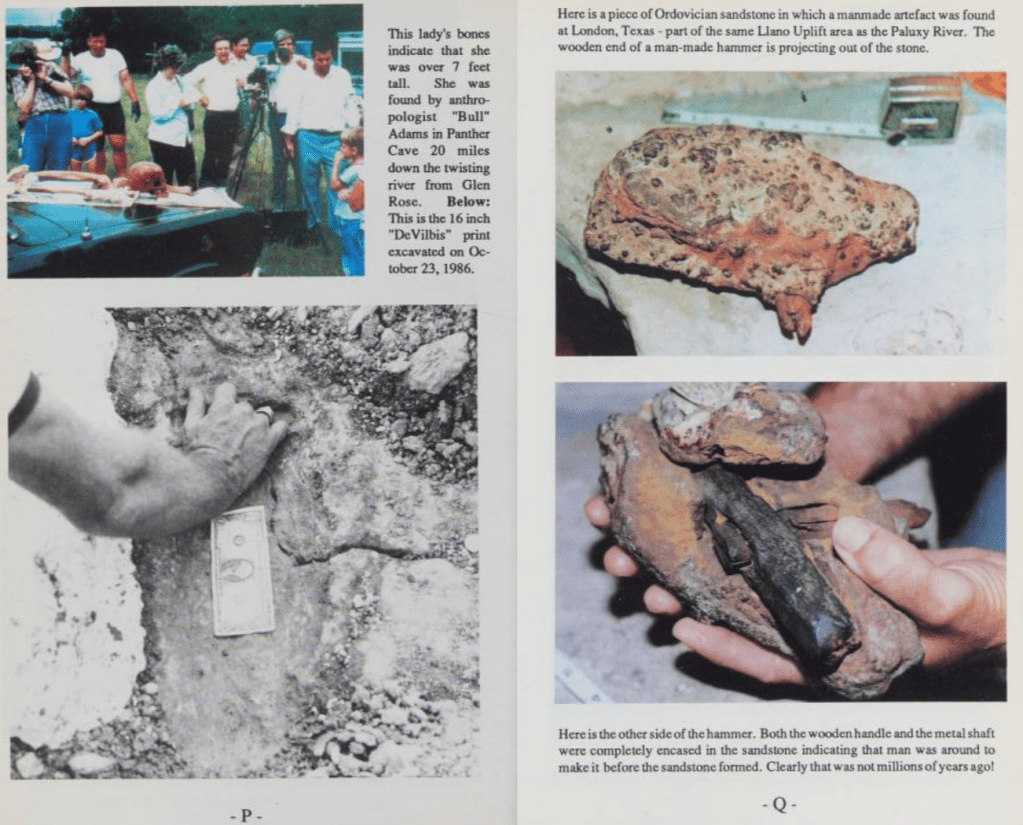
The skeleton was first associated with the young-Earth Paluxy narrative in Baugh and Wilson’s 1987 Dinosaur: Scientific Evidence That Dinosaurs and Men Walked Together. (Plate P; Fig. 16) Baugh recounts that John Morris of the Institute for Creation Research had informed him that Wayland “Slim” Adams, Bull Adams’ son, possessed an allegedly 7 ft tall female skeleton unearthed from Panther Cave. Baugh and Wilson went to Adams’ home and found that he kept the disarticulated skeleton, along with various other bones and remains, in a deep freezer. They included photographs of some of the bones but don’t discuss when the giants remains were found or how they differentiated them from the other “normal” bones that had been collected from the same site throughout the decades. (Baugh & Wilson, 1987, p. 60-61, Plate P) While neither outright claims that the skeleton was that of a pre-Flood giant track-maker, the implication of a connection between the skeletal remains and the Paluxy “man-tracks” is heavily implied, with the skeleton’s stature claimed to be a possible result of pre-Flood conditions. However, based on Bull’s excavations in the 1940s, it is known that the cave comprises burials from the 10th century CE, not the 25th century BCE where young-Earth timelines place the Flood.9 (Thomas, 2018)
The same photos appear in the 1991 2nd edition of Dinosaur and are revisited in Baugh and Wilson’s 1992 Footprints and the Stones of Time, (p. 91) where two additional black and white photographs of the skeleton appear (along with another skull said to be from the same area). (Fig. 17)
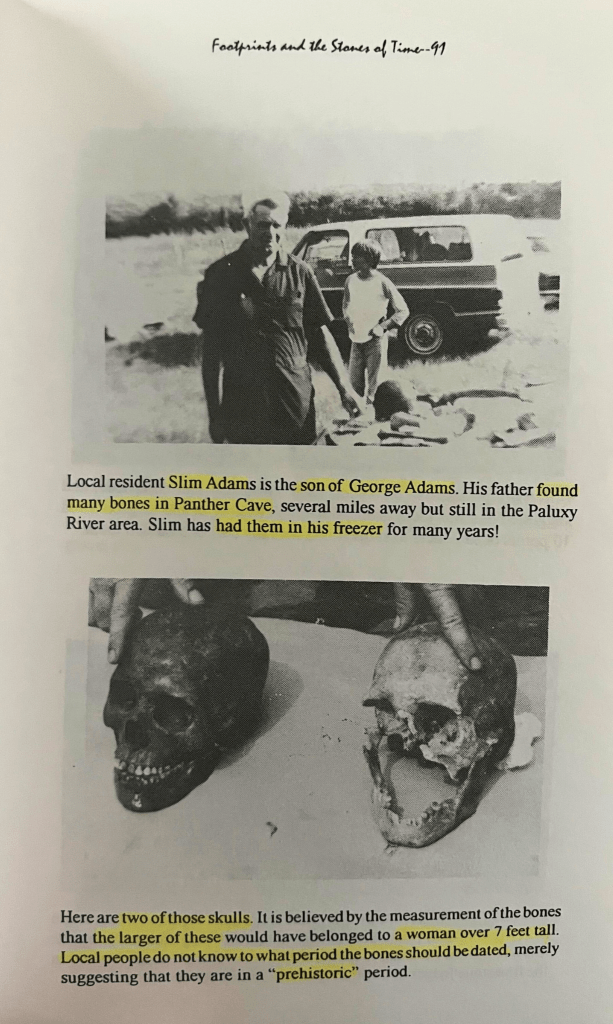
Based on these photographs alone, the remains do not appear to be those of a giant. I sent the photographs provided by Baugh and Wilson (Figs. 16 & 17) to biologist Tom Vance of the Dallas Paleontological Society, who pointed out that other than some slight deformation that was likely the result of soil compression after the remains had been buried, the skulls appeared to be of an ordinary size.10
None of the sources I found discussed whether the bones described by Tolbert and Maguire and photographed by Baugh and Wilson were found after the 1949 excavation, or whether Bull’s 7 ft estimate, first reported by Maguire and Tolbert, was a reinterpretation of those earlier remains. If it was the former, it would explain why Bull’s 1949 paper and Tolbert’s 1974 article both describe the remains as Native American and as having “perfect teeth”, lacking any indication of dental cavities or pyorhhea, a bacterial disease that effects the teeth, gums and jawbone. (Adams, 1949, pp. 19-20) However, the only bone that would give a reliable measure of height discussed by Bull in his 1949 paper was a female femur measuring 17.5 in, which, when using the average femur length to total height proportion, corresponds to an individual 5 ft 5 in tall, within the estimated expected range for North American Native populations and well below the later 7 ft estimate.11 (Auerbach & Ruff, 2010, pp. 190-207) So why, then, would Bull come up with an estimate so much taller than he had given three decades prior?
Given the lack of documentation of how Bull separated and differentiated the disarticulated bones of the “giant” from the numerous other disarticulated bones that Baugh and Wilson report were also stored in the freezer, (1992, p. 91) it’s possible that the giant was actually a composite of the original 1949 remains and those of other individuals found later and “mixed in” with them in the deep freezer. Disarticulated remains are already notorious for the difficulty people have in estimating their height. A well-known case occurred in 1984, when anthropologists examined a famous Native American skeleton excavated by archaeologist John Reid in the 1900s that he claimed was 9.5 ft tall, and found it to only be 5 ft 11 in. The height recorded by Reid was a miscalculation resulting from Reid visually using his own femur as a reference point without accounting for the fact that the femur’s head fits into the hip socket rather than extending outside of the body. (Brooks et al., 1984) More recently, in early 2024, a skeleton belonging to the Salasaca peoples of Ecuador that was said to be a 7 ft tall pre-Columbian giant was measured and wound up being less than 5 ft tall, with researchers concluding that disarticulated skeletons, like those found in Panther Cave, can cause people to perceive the individual to have been taller than they were in life. (Landol, 2024) And this is assuming that all of the remains in question are from the same individual. One of the bones in the photograph shown in Fig. 16 (to the left of the skull) appears remarkably thick and robust for a female femur. In humans, male femurs are typically significantly longer and thicker than female femurs. (Moosa et al., 2021) If Bull did not document and sort the remains correctly and left them jumbled together, it’s not unlikely that he would mix them up over the span of 30 years and add an extra 18 in to what he thought was a female skeleton using a mix of bones. The evidence seems to suggest that, given the absence of any formal measurement, proper storage, and the well-known pitfalls in estimating the height of disarticulated remains, that the Panther Cave giant was likely built-up out of the remains of several ordinary-sized Native Americans from the 10th century and was inflated into a single oversized individual through improper documentation and mis-measurement. Far from being the remains of someone responsible for making the allegedly pre-Flood “human” tracks in the river, it stands as a reference for how some claims about human remains can grow in retelling – sometimes to heights greater than the remains themselves ever did.
Since hardly anything is known about the remains for certain, I actually tried to track down some contemporary information about them in the summer/fall of 2024. According to a forum post by David Campbell in 2009, the skeleton was on display at the Somervell County Museum until it was reclaimed by a member of Bull Adams’ family after it subjected them to unwanted questions about their associations with young-Earth creationist Carl Baugh. (Campbell, 2009) I met with the director of the Somervell County Museum and showed him my notes and asked him about the skeleton, but he said that if it had been on display, it would have been before he took over the museum. I spoke to one resident who specifically asked to remain anonymous, since the skeleton is apparently a sensitive topic for the family. However, no one seemed to know what happened to the skeleton after it left the museum. Speculation abounded regarding why the skeleton wasn’t better preserved, if vandals or rival family members broke into Bull’s home and destroyed it, all the way to Adams himself unintentionally ruining it in a manic fit. At the time of writing, the skeleton’s current whereabouts seem to be known only to the Adams family themselves.12
TRILOBITES (1985-1986)
Between 1985 and 1986, Carl Baugh began promoting the discovery of two trilobites that were said to have been found in the Paluxy River. If authentic, these fossils would have been remarkably out-of-place, since trilobites are thought to have gone extinct around 250 million years ago (over 100 million years before the layers observed in the Paluxy were deposited). However, neither turned out to be evidence of genuinely late-surviving trilobites.
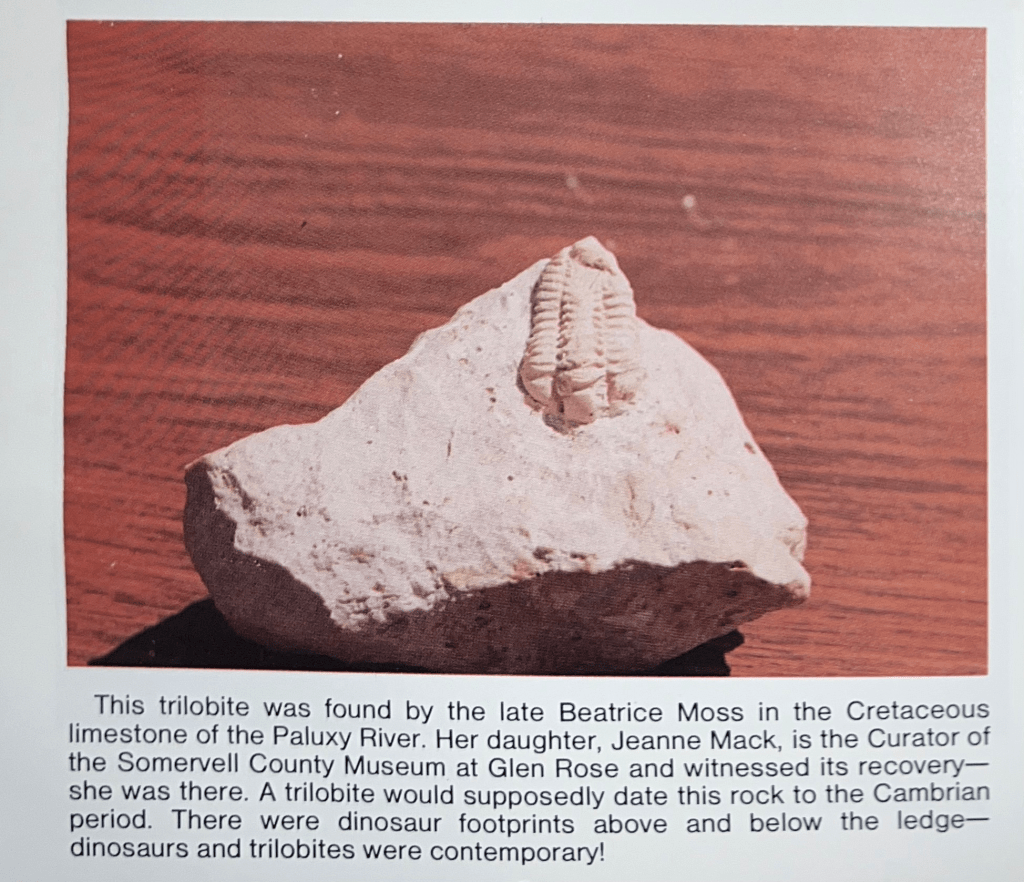
The first trilobite from 1985 was claimed to have been discovered by local residents Beatrice Moss and her daughter Jeanne Mack during a fossil hunting trip in the Paluxy in the 1960s. (Baugh & Wilson, 1987, pp. 140-141) While the fossil itself was a real trilobite (Fig. 18), it was later determined to not have come from the Paluxy River. Chemical analysis revealed that the fossil was composed of dolomite rather than limestone after nearly identical Silurian dolomite trilobites were found for sale at the 1985 Fossilmania show in Glen Rose, raising suspicions that the fossil may have been either accidentally dropped into the river or purposefully “salted” there before being found by Moss and her daughter.13 (Hastings, 1986) Baugh and Wilson featured the trilobite in both their 1987 first edition and 1991 second edition of Dinosaur, though the photograph was notably omitted from the latter – likely due to the realization that the trilobite was visibly inconsistent with the Paluxy’s geology. (1987, pp. 133, 140-141, Plate S; 1991, pp. 147-148, 154-155)
The second trilobite was said to have been discovered in December 1986 at the same site and time as the “Glen Rose Man” tooth (discussed below), and fares no better than the first. Despite Baugh’s claim that the find was a trilobite, researchers he showed it to described it as a “string of black, bead-like segments”, bearing little resemblance to the flattened or curled-up trilobites commonly found in the fossil record and lacking their distinct anatomical features. (Hastings, 1987) It was later determined to be a row of crushing/grinding teeth of a pycnodont, an extinct bony fish whose remains have been found in the Lower Cretaceous strata of the Paluxy. This was so evident that young-Earth creationist John DeVilbiss said that he and Don Patton were the ones who convinced Baugh to back away from claiming that the teeth were actually a trilobite. (Hastings, 1995)
MASTODON TOOTH (1987)
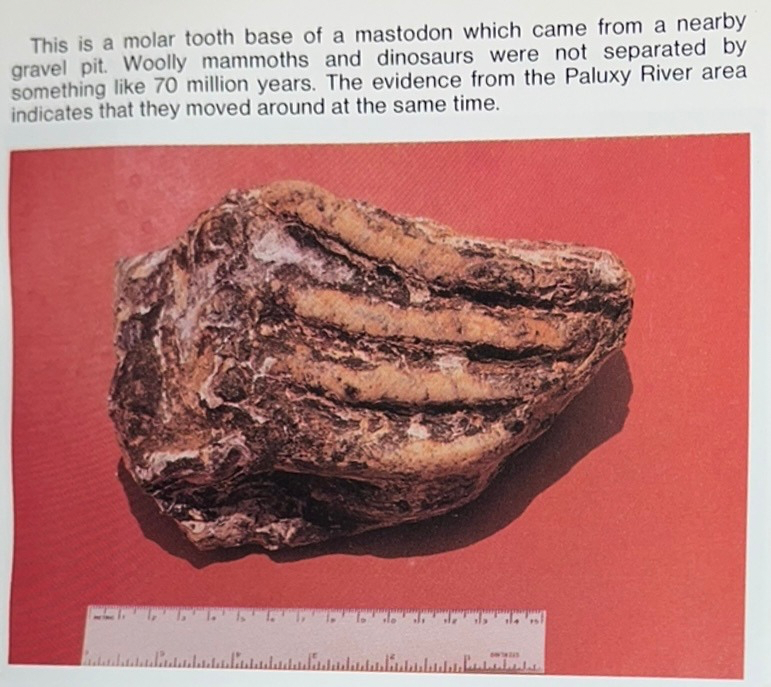
In the first edition of Dinosaur, Baugh and Wilson include a photograph of what they claim is a mastodon tooth discovered in a gravel pit near the Paluxy River, which they argue serves as evidence that mammoths coexisted with dinosaurs. (1987, Plate S; Fig. 19) However, the Paluxy is located within the Brazos River Valley, which is known for its diverse geology, including Pleistocene terraces and Quaternary alluvium, which overlay the much older Cretaceous bedrock. (Jarvis, 2019) Thus, even if the tooth did belong to a mastodon, it wouldn’t exactly be an extraordinary find since the remains of mammoths and mastodons are found throughout the Brazos Valley (the well known Waco Mammoth National Monument, located within the Brazos River basin, comes to mind). References to their remains being found in the Glen Rose and Paluxy area do pop up from time to time, and finding one in a loose gravel pit would be consistent with the area’s known geological context and wouldn’t by default imply they were contemporaries of dinosaurs. (Jones, 2015)
SOFT-TISSUE INSECT (1986)
In their 2007 Texas Tracks and Artifacts, Helfinstine and Roth claim that a sample of Glen Rose limestone taken from the McFall site was analyzed in April 1986 and found to contain what appeared to be a small, fossilized insect. They reported that “The insect was pliable, i.e., it was not a mineral replacement of the original material”, with its legs embedded in the rock and the rest of its body resting on top of it. (pp. 54, 90; Fig. 20)
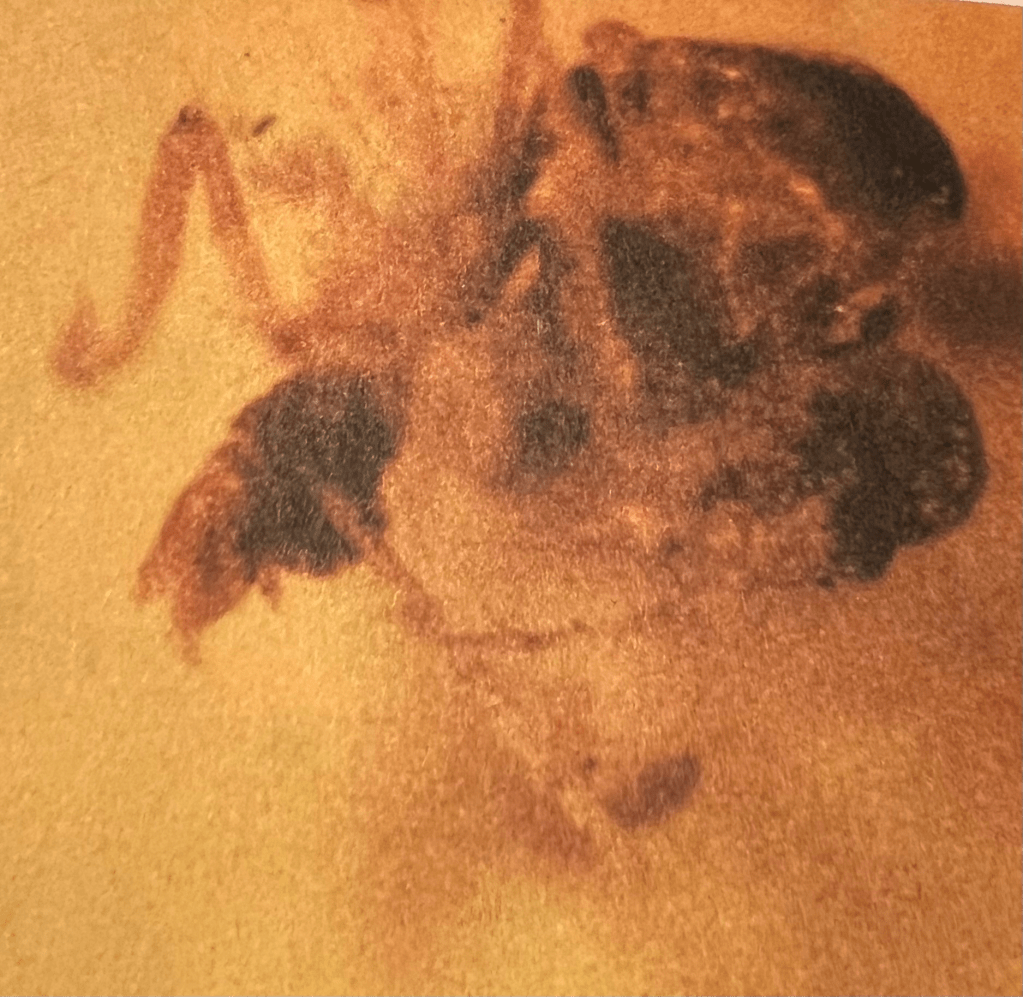
How they concluded that the insect was from the Cretaceous, they don’t say. Based on the image they provided, the insect doesn’t display any characteristics that immediately stand out as an ancient species. The fact that it wasn’t encased in the rock and was “pliable” makes it far more likely that what they had found was a modern insect whose legs had become embedded in the limestone when the rock was temporarily “softened” by moisture. Limestone is primarily composed of calcium carbonate, and under the right conditions can undergo a process called microbially induced calcium carbonate precipitation (MICP), where microbes such as ureolytic bacteria form calcium deposits on limestone rocks. These deposits can be amplified by additional calcium carbonate carried by water flowing in or near a limestone environment (such as the bed of the Paluxy River) and deposit further minute layers of calcite onto the surfaces of rock, which could potentially trap small objects or organisms (like very small insects) on them as the calcite crystallizes. (Sreekala et al., 2024) An insect having its legs encased in a calcium deposit on top of a piece of limestone is far more likely than a fossil so extraordinary and delicate existing undisturbed on the exterior of a piece of limestone taken from an exposed surface in the riverbed. Helfinstine and Roth’s work does not consider this possibility, nor do they explain how exactly the fossil could have remained intact while exposed. They include the find as almost an afterthought without much analysis, assuming that by suggesting the insect is anomalous that it is therefore anomalous, when conventional explanations that are for more likely better explain the find.
LEPIDODENDRON STIGMARIA (1987, 1989, 2021)
Since 1986, Carl Baugh – or colleagues of his such as Helfinstine & Roth (2007) or Ademar Rakowsky (2022) – have claimed to have found at least three supposed Lepidodendron root fossils (Stigmaria) in the Paluxy River. If legitimate, they would pose some issue to geology, since Lepidodendron is a genus of ancient lycophyte trees that went extinct in the Carboniferous. All three of these have been reviewed individually in a previous paper, and the following is a short summary of that paper’s main points. (Edmonds, 2025b)
The first case, dating back to 1987, was publicized by Carl Baugh, who claimed to have found a “coalified” Stigmaria during his excavations in the Paluxy River. The fossil was poorly documented with minimal photographic/descriptive evidence, and was described as a plant fossil embedded in “marl”, which may have been a loose sedimentary material able to incorporate modern debris (as opposed to more solid marlstone). After looking at what little information there was, it was determined that the fossil did not exhibit any of the unique anatomical features that define lycophytes and was likely either a piece of Cretaceous wood or a modern inclusion of a branch or root into soft marl.
The second case, reported in 1989, is even less well documented. Baugh and his team promoted another supposed Stigmaria fossil found in the Paluxy River, but few descriptions and only a single photograph of the find exist. The photograph is blurry and taken at a distance, and no specific details are provided about the exact conditions of the fossil. The lack of documentation makes it impossible to verify Baugh’s claims, and based on the photo, the “root” is likely a branch from an expected Cretaceous plant species.
The most recent claim, from 2021, was promoted by the Kolbe Center for the Study of Creation, a Catholic young-Earth creationist organization, and involved a supposed Lepidodendron root fossil found during one of Baugh’s Creation Evidence Museum excavations in the Paluxy (likely at the McFall site). Unlike the other two Stigmaria, this one was better documented, with very clear photos and descriptions published by the Center. However, following a detailed analysis of the fossil and consultations with specialists from the Dallas Paleontological Society and the Fossil Forum, it was concluded that the fossil closely resembles driftwood with Teredolites borings – traces left by Cretaceous marine bivalves. This interpretation fits well within the Paluxy’s geological context where Cretaceous driftwood is commonly found, and provides a far more plausible explanation.
HUMAN TOOTH (1987)
In June of 1987, Carl Baugh announced the discovery of a tooth he found at the McFall site that he quickly labeled as human (named “Glen Rose Man” by Baugh and Don Patton and cataloged as FSCM) and publicized as a blow against evolution since it was found in the same layer as dinosaur tracks.14 However, Ron Hastings (a well-known Paluxy researcher) traced the history of the tooth in a paper titled A Tale of Two Teeth (1995). In the paper, Hastings noted that, of the experts that Baugh consulted to get the tooth identified as human (such as the research staff of the University of Texas at Austin’s Vertebrate Paleontology Lab, paleontologist Arthur Busbey of Texas Christian University, and even Raymond Rye and Robert Purdy of the National Museum of Natural History in Washington D.C.), they unanimously identified FSCM as a fish tooth, specifically from a group of Cretaceous fish known as pycnodonts (Pycnodontiformes). To demonstrate how common such finds might be in the Paluxy, Hastings engaged in a nearly year-long hunt for similar teeth, finding one almost identical to Baugh’s (cataloged as IH2) just four months later, and eventually amassing a collection of five pycnodont-like incisors that resembled FSCM and over one hundred and sixty pycnodont-like grinding teeth/tooth fragments.
Interestingly, experts who identified the tooth as not human came from Baugh’s own camp as well. Shortly before Hastings discovered IH2, Dr. David Menton – a young-Earth creationist and biologist employed in the Anatomy Department of Washington University’s School of Medicine – had analyzed FSCM using a scanning electron microscope (SEM) at Baugh’s request, and found that the tooth was not human based on the dentition patterns it had, and echoed the previous conclusion that the tooth had come from a pycnodont. These observations would later go on to be confirmed by Dr. James McIntosh at Baylor College of Dentistry in Dallas, who scanned both FSCM and IH2 and showed that both teeth had clear fish-like patterns “with no resemblance of human enamel prisms”. Dr. Arthur Chadwick, a young-Earth creationist geology professor at Loma Linda University, had a personal collection of fossilized teeth similar to Hastings’ and noted that he could not see how Baugh’s tooth had any likelihood of being human.
Baugh and Patton eventually saw the writing on the wall, and in February 1989, both publicly announced to their supporters that the tooth was definitively not human – however, neither seemed to appreciate the irony in the fact that Baugh has long criticized evolutionists of “building a man out of a tooth” in the Nebraska Man incident when he himself had fought tooth and nail (no pun intended) to build one himself. (Hastings, 1995) Despite his retraction, Baugh still promoted the human interpretation in his and Wilson’s 1991 revision of Dinosaur (Plates Y, Z, AA, BB) and even currently sells material that suggests it, such as Helfinstine and Roth’s Texas Tracks and Artifacts (2007, pp. 28-31, 50, 84-89, 91-94, 114)
MAMMALIAN JAW (1990s)
Helfinstine & Roth’s Texas Tracks and Artifacts states that, in the early 1990s, a fossilized mammalian skull was discovered in Texas’ Cretaceous rock, though whether it came directly from the Paluxy is left vague.
“This unique fossil specimen appears to be a partly compressed skull of a small mammal. The most prominent features of the fossil are the well-defined teeth on one side…The fossil is approximately 30mm in length and appears to have been compressed before fossilization. Although it was not found in situ (in original location), it was found in Brazos River alluvium from an area that is predominantly Cretaceous deposits. It is made of redeposited calcium carbonate of the same color as the Cretaceous limestone in the area.” (p.43)
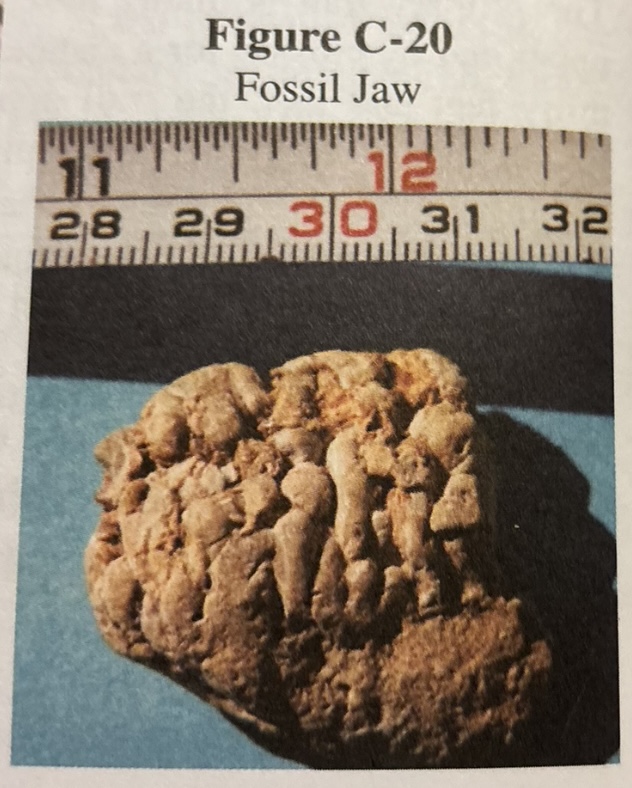
Despite this description, the object does not resemble a skull/jaw at all. The elongated, bulb-tipped tubular protrusions on the surface are clearly part of the rock they rise out of, differ greatly in size and orientation, merge into one another, and taper downward, unlike fossil teeth. There is no enamel sheen, no contrasting dentine, no roots, no alveolar sockets, no occlusal surfaces, and zero bilateral symmetry. (DAC, n.d.) A genuine mammal jaw/skull fragment of this size should show a linear or gently arched single row of tooth crowns (not a cluster of irregular knobs), distinct crown/root morphology, cusps, harder enamel contrasted against softer bone, recognizable bone architecture or at least an alveolar ridge, and consistent orientation of teeth in one occlusal plane. (Jager et al., 2020) None of those are present. The cited “compression” doesn’t explain these issues either, since compression would flatten and spread these identifiable structures rather than generate randomly oriented/fused nodules.
Noticeably, the area chipped away at the bottom right of the “jaw” shows homogenous fine-grained carbonate rather than cancellous bone. Given that all surfaces (including the “teeth”) are identical in color, grain, weathering texture, and luster, the object more closely resembles a calcium carbonate rock known as a “caliche”, which are common in Quaternary Brazos alluvium. (Baker et al., 1964, p. CC23) This identification would easily explain the find’s irregular nodule appearance, with the clustering protrusions as irregularities in the rock’s makeup rather than “teeth”. (KGS, 2023)
Additionally, Helfinstine & Roth’s explanation for why the “jaw” would have to be Cretaceous also falls through. As was discussed above regarding the supposed mastodon tooth found in the Paluxy, loose Brazos River alluvium does rest above Cretaceous limestone but also contains abundant Quaternary fragments indistinguishable in color from the bedrock. Even if it were bone, finding a small mammal fossil in Quaternary alluvium would not be any evidence for an out-of-place find, especially given that mammals first emerged 225 million years ago in the late Triassic. (Novacek, 1997)
CARBON-14 IN DINOSAUR BONES (1986-2010)
In Helfinstine and Roth’s Texas Tracks and Artifacts, the authors report finding dinosaur bones that contained an anomalous amount of intrinsic 14C in them. (2007, pp. 125-129, Table 3) These were among those recovered by Carl Baugh and his team in 1984, and later submitted for radiocarbon dating by young-Earth creationist Hugh Miller’s Paleochronology Group. (Dahmer et al., 1990; Kuban, 2022b) They argue that, since 14C has a half-life of about 5,700 years, after around 10 half lives (about 60ka) a closed sample should be “radiocarbon dead”. Therefore, any material that still contains 14C must be less than 60,000 years old. (Fischer, 2014)
“The dates themselves are not as important as the fact that there is measurable Carbon-14 in dinosaur bones. If dinosaurs have been extinct for 65 million years, there should not be one atom of Carbon-14 left in their bones!” (Fischer, 2014)
However, the bones they tested were not only improperly documented during excavation, but are not actually a closed system when it comes to radiocarbon. Paleontologist Philip J. Senter examined a large sample of creation-science published cases of radiocarbon dating in dinosaur fossils in 2020 and noted:
“Fossil bone incorporates new radiocarbon by recrystallization and, in some cases, bacterial activity and uranium decay…Mesozoic bone consistently yields a falsely young radiocarbon “date” of a few thousand to tens of thousands of years.” (Senter, 2020, p. 72)
| Contamination pathway (Senter, 2020, 2022) | Mechanism | Why the Paluxy amplifies the mechanism |
|---|---|---|
| Recrystallization of bone mineral | Atmospheric and groundwater carbonate replaces phosphate in apatite, trapping modern 14C inside the lattice. (Senter, 2020, pp. 73-76; 2022) | The Glen Rose Formation is a limestone carbonate aquifer; every flood pulse bathes bones in CO₂-rich water. (TWDB, 2016) |
| Calcite permineralization and microbial diagenesis | Pore spaces fill with fresh calcite that carries modern carbon deposited by microbes early in fossilization and continually after. (Senter, 2020, pp. 73-76) | After the initial diagenesis, seasonal wet–dry cycles along the river precipitate new calcite repeatedly. (Senter, 2020, pp. 73-76) |
| Uranium uptake & in-situ 14C production | Fossil bones soak up U; α-particles generate neutrons that convert 17O/11B to fresh 14C inside the bone, while U-daughter elements emit 14C. (Senter, 2020, pp. 74-76) | Trinity-Group/Glen Rose Formation groundwaters that feed the Paluxy often exceed 30 µg L-1 U, the EPA limit for drinking water (Beynon, 1991, pp. 38-39; Reedy et al., 2011, p. 70) |
The uranium issue is the most jarring reason dinosaur bones don’t represent closed systems for radiocarbon. Fossil bone can concentrate 10-100 ppm uranium, which is six orders of magnitude higher than in living tissue. Once in place through the recrystallization process, uranium and its daughters bombard the bone with α-particles and continually top up the fossil’s 14C inventory. As noted by Senter:
“Radioactive emissions from 238U add new 14C by converting certain other isotopes (e.g., 17O and 11B) into 14C (Jull et al., 1985; Bonvicini et al., 2003). In addition, some of the daughter isotopes of 238U (e.g., 223RA, 224RA, and 226RA) themselves emit 14C nuclei during radioactive decay (Ronen, 1997; Bonvicini et al., 2003). Buried bone readily takes up uranium via groundwater (Hedges & Millard, 1995) and concentrates it, so that fossil bone usually has a higher uranium content than the surrounding sediment (Goodwin et al., 2007; Kisleva et al., 2019). (2020, p. 75)
A mere 10 ppm uranium is enough to generate about 0.05% modern carbon, already low enough to pull a sample millions of years old into the 40-45ka region. (Jull et al., 1985) Higher uranium concentrations push the apparent age even lower, which is exactly what we see in the Paluxy samples. This is especially likely given the ambient uranium present in the Trinity Aquifer/Glen Rose Formation is well above the 30 µg L-1 limit for drinking water (and was when the bones were uncovered). (Beynon, 1991, pp. 38-39; Reedy et al., 2011, p. 70; TWDB, 2016) This alone is enough to immediately call the validity of claiming dinosaur bones in the Paluxy contained intrinsic non-contaminated 14C into question, but there are deeper issues in the creationist methodology that make the case nearly impossible to argue.
For example, most fossil specimens come with a tightly documented lineage when submitted for testing and afterward. The Paluxy specimens submitted by Miller for dating do not, with their publications in disagreement over who exactly found them. Helfinstine & Roth (2007, p. 127) state that it was Carl Baugh and Al Parker, while Fischer (2014) and Miller et al. (2019, p. 2) state that it was Carl Baugh and G. Detwiler. (Table 3 & 4)
| Specimen, collector, year | Year, location tested | Equipment, returned age |
|---|---|---|
| Acrocanthosaurus bone fragments, Baugh & Parker, 1984 | 1986, Location NA | Conventional, >36,000 YBP |
| Acrocanthosaurus bone fragments, Baugh & Parker, 1984 | 1989, Location NA | Conventional, >32,000 YBP |
| Acrocanthosaurus bone fragments, Baugh & Parker, 1984 | Date NA, “Overseas lab” | AMS, 23,750 +/-280 YBP |
| Acrocanthosaurus bone surface scrapings, Baugh & Parker, 1984 | 1990, University of Arizona (AA-5786) | AMS, 23,750 +/-270 YBP |
| Specimen, collector, year | Year, location tested | Equipment, returned age |
|---|---|---|
| Acrocanthosaurus, Baugh & Detwiler, 1984 (GX-15155-A) | 11/10/1989 (Beta), 6/14/1990 (AMS), Geochron Labs, Cambridge, Massachusetts | AMS (Beta), >32,400 YBP AMS, 25,750 +/-280 YBP |
| Acrocanthosaurus, Baugh & Detwiler, 1984 (AA-5786) | 10/23/1990, University of Arizona | AMS, 23,760 +/- 270 YBP |
| Acrocanthosaurus, Baugh & Detwiler, 1984 (UGAMS-7509a – carbonate fraction) | 10/27/2010, University of Georgia, Athens, Georgia | AMS, 29,690 +/- 90 YBP |
| Acrocanthosaurus, Baugh & Detwiler, 1984 (UGAMS-7509b – bulk organic fraction) | 10/27/2010, University of Georgia, Athens, Georgia | AMS, 30,640 +/- 90 YBP |
Suppose the Paleochronology Group can’t nail down the dig team reliably – this has direct implications for the quality of the excavation. Glen Kuban notes that paleontologist Wann Langston had been present for the 1984 excavation of the Acrocanthosaurus, and said that “…the bones had been so hastily and crudely excavated (with plaster being thrown on the raw bones without any separating material) that he did not want to become further involved with the matter…”. (Kuban, 2022b) This raises questions about how they can reliably report on the handling, gluing, storage, and other aspects of the bones, all of which are crucial for radiocarbon dating work. Further, as part of the original study (Miller et al., 2019), the group mailed multiple bone fragments from locations other than the Paluxy to the University of Georgia AMS lab that they said had been identified as dinosaur remains. However, these samples (UGAMS-1935, said to belong to a hadrosaur, and UGAMS-2947, said to belong to an Allosaurus) later turned out to have, respectively, belonged to a bison and a mammoth. (r/ThurneysenHavets, 2021) This leads naturally to confidence in the other specimens, including those from the Paluxy, to be immediately eroded. Regardless of their identity, all of the dates derived by the group are well over 10,000 YBP. (Table 3 & 4) Once bone is older than around 10,000 years, contaminants bind so tightly to its collagen that only the hydroxyproline (HYP) method – which isolates the HYP amino acid for testing – can strip them away. As Senter notes:
“In 2019, a YEC team finally reported a set of radiocarbon ‘dates’ for Mesozoic dinosaur bones in which they used only the ‘collagen fraction’ without the mineral fraction (Miller et al. 2019). They thus avoided the problem of contamination via recrystallization of bone mineral…However, all the ‘dates’ that they obtained were over 10,000 years. As we have seen, bone that is older than 10,000 years cannot yield an accurate radiocarbon date except via the HYP method. The team did not use the HYP method, and therefore their radiocarbon dates for the dinosaur bones are falsely young.” (Senter, 2022)
Thus every age reported by Fischer (2014) and Miller et al. (2019) – 22,000 to 42,000 years – is invalidated by their own methods section, including those taken from the Paluxy. Both of these sources also suggest that all of the Paluxy Acrocanthosaurus specimens came from a single set of remains (those excavated by Baugh in 1984), yet the reported ages between the youngest dates found and oldest differ by around 7,000 years. Senter (2022) mentions that results showing this type of spread is a sign that each piece contains a different dose of modern carbon picked up after burial, with genuine skeletal remains dating within analytical uncertainty of one another.
Given the information we’ve reviewed here, the Miller work is not sufficient to argue that the Paluxy has produced evidence of late-surviving or anomalously recent dates for dinosaurs. When the science is done correctly, the Cretaceous remains firmly in the Cretaceous.
“To make a long story short, multiple YEC teams have now subjected Mesozoic dinosaur bone to radiocarbon dating, and each YEC team has botched the procedure so badly that all their radiocarbon ‘dates’ are wrong – very, very wrong. Radiocarbon dating only works when you do it right. So far, no YEC team working with Mesozoic dinosaur fossils has done it right.” (Senter, 2022)
CONCLUSION
Across more than a century of reporting, the alleged Paluxy “paleo-anomalies” consistently demonstrate how pseudopaleontological narratives are manufactured and sustained. In this case, the story has been stitched together from carvings and altered specimens, mismatched or extraneous finds, ordinary lithologic and taphonomic features promoted as fossils, Quaternary materials relocated to the Cretaceous, contaminated and open-system samples, and now untraceable objects that can’t be independently re-evaluated. Its continuity depends on precisely those weaknesses that disqualify it as scientific or reliable: non-in situ recovery, shifting origin accounts, absent chain-of-custody, and a receptive audience willing to privilege a sensational interpretation over more likely explanations.
This paper evaluates that narrative on its own terms by collating the primary claims, assembling the original assertions, tracing the contradictions and applying fair, standard analysis, and has not been able to find any support for the anomalies discussed. As such, it serves as a consolidated reference point so that future researchers won’t have to continually re-hash vague or nebulous claims about the supposedly out-of-place items said to have come out of the Paluxy.
Ongoing work, such as obtaining original conference proceedings for the additional “young wood/bone” dates or locating surviving documentation for the Panther Cave skeleton, may allow some of the remaining loose threads to be tied off even more conclusively. However, until then, the anomalistic narrative supplies no support for out-of-place finds within the Paluxy River.
Footnotes
- Carl Baugh has claimed to have excavated at least seven such cat prints from the Paluxy, but has only ever publicly displayed one. (Baugh, 1996, pp. 5-6)
- A photograph of a “cat’s paw track” appeared in Cecil Dougherty’s Valley of the Giants, included in the 2023 ninth edition re-release. (p. 68) However, this print differs from the known carvings discussed and seems to be little more than natural blemishes in the riverbed that bear a superficial resemblance to a cat’s paw when photographed at the right angle. Similar markings can be seen throughout the photographed area, any of which could easily be interpreted as a “cat track”. It is similar to a so-called “dog-track” found in 1980 on Jeannie Mack’s farm in Glen Rose. A photograph of this “print” was featured in a 1984 edition of Valley of the Giants, as noted by Fleming and Caldwell (2022, p. 36), though it was omitted from the 2023 edition. The “print” bears little resemblance to an actual canine print, consisting of six pockmarks selectively highlighted with water and photographed upside down, with the “pad” of the print at the top. This orientation was likely chosen to create a more canine-like appearance, but the illusion breaks when the image is viewed right side up.
- According to Gilroy (2011), he was already intensely involved in his “giant hominid” research during the time the Paluxy tracks first began to receive widespread attention in the 1960s and 1970s, so visiting the site himself at the invitation of Dougherty or another local due to the “man-track’s” relation to his interests is not entirely out of the question.
- While Taylor commendably withdrew his film from circulation and ordered all copies returned when he was convinced that the “human” tracks in the river were actually either erosional features or misidentified dinosaur tracks, John Morris also backed down from his claims regarding anomalous tracks in the river – though in a much less forthright manner. Whether or not he made a full retraction is debatable, and his organization, the Institute for Creation Research, seemingly endorses the human track interpretation to this day. (Chadwick, 1987; Edmonds, 2025a; Kuban, 2010)
- G. Kuban, personal communication, September 6, 2024.
- When I first viewed the black and white photos, I incorrectly initially considered the possibility that the branch may have been an iron oxide deposit, as Fields and Beierle described it as being covered in “stone bubbles” or globules, which averaged 3-4 mm in diameter. (1979, p. 88) These features sounded like hematite iron oxide deposits which often form irregular nodules in sedimentary rocks like limestone as a result of oxidation. I also found that Carl Baugh had made a similar error years later when he claimed to have found carbonized wood in the Paluxy only for it to later be positively identified as an iron oxide deposit. (Baugh & Wilson, 1991, p. 55, 59; Hastings, 1985, p. 6) However, the “bubbles” are likely knobby tufa/tavertine botryoids: concentric calcite balls that grow where CO2 degasses quickly, precipitating rapidly in considerable numbers.
- The apparent age (t) of a sample is calculated from its fraction modern carbon (Fm) with the exponential-decay equation “Age (yr BP) = -8033 In(Fm)” where 8,033 years is the mean life of 14C derived from the conventional Libby half-life of 5,568 years. (NOSAMS, 2020) Rearranging gives the mixing fraction used in Table 1, Fm=e-t/8033. Hence a measured age 12,800 BP implies Fm≈e^(–12,800/8033) ≈ 0.20, i.e. about 20% modern carbon mixed into an otherwise 14C-dead sample.
- A photograph of a “child’s handprint” is featured in Cecil Dougherty’s Valley of the Giants, included in the 2023 ninth edition re-release. (p. 72) The print, originally photographed in 1978 by Elizabeth Pope, appears to be either an erosional feature or natural blemishes in the rock surface. The resemblance to a handprint is achieved only by selective highlighting with water, which Dougherty himself acknowledges was done to make the “print” more visible for the camera. This common technique of enhancing natural features to more resemble human imprints is an often-used embellishment used by Paluxy man-track advocates for several decades. (Kuban, 2022b)
- Given that even in his heyday Baugh was on the fringe of “mainstream” creation science research, less than five years after his and Wilson’s suggestion that the Panther Cave “giant” may have been pre-Flood, young-Earth creation geologist Dr. Andrew Snelling would publish an article in Creation noting that up to that point there were no examples of conclusively human remains in pre-Flood or Flood deposits, and passively critiques Baugh’s work at the Paluxy as unscientific. (Snelling, 1991)
- T. Vance, personal communication, October 30, 2023
- A person’s femur generally accounts for about 27% of their total height. (Feldesman et al., 1990) According to Auerbach and Ruff’s 2010 estimation of the average stature of Indigenous North American Populations (pp. 190-207), the mean height for females ranged from 141.18-166.13 cm (4.5-5.5 ft) depending on the specific population group and geographic region. If those individuals’ femurs accounted for 27% of their total height, then their femurs would have ranged from 38.12-44.86 cm (15.01-17.52 in), with Adams’ 1949 femur measuring 44.45 cm (17.5 in) and falling within expected ranges.
- A painting of Bull Adams holding a skull by artist Robert Summers has long resided in Barnard’s Mill, an art museum in Glen Rose. I was able to speak with Summers while in town trying to track down the skeleton, and he confirmed that the skull he depicted was not one of the ones from Panther Cave. He had not used a specific skull as a reference, but had conceptualized a composite for the piece from several different skulls.
- I personally have heard of individuals leading fossil trips where they have salted fossils to be found by the parties they take hunting for them, admitted to by the individuals themselves. It is a common enough practice to be a much more likely explanation for the trilobite, given the lack of any in situ information for the find.
- Baugh has never seemed to understand how taxonomic nomenclature works, having in the past referred to the alleged human tracks in the river as being made by Humanus baughanthropus, rather than Homo sapiens. (Kuban, 2022a; 2022b) Accordingly, Baugh gave the supposed owner of the tooth a brand new designation as well – Humanus Daviddii Glen Rose.
REFERENCES AND FURTHER READING
Adams, E. T. (1949) Skeletal Remains of Man and Extinct Animals: A Camp Site Covered by River Drift. Bulletin of the Texas Archeological and Paleontological Society, 20, 7-20.
Armstrong, J. R. (1989) Seeking Ancient Paths. Perspectives on Science and Christian Faith, 41(1), 33-34.
Auerbach, B. M. & Ruff, C. B. (2010) Stature Estimation Formulae for Indigenous North American Populations. American Journal of Physical Anthropology, 141, 190-207.
Baker, R. C., Hughes, L. S., Yost, I. D. (1964) Natural Sources of Salinity in the Brazos River, Texas. U.S. Geological Survey.
Baugh, C. E. (1996) Creation in Symphony: The Evidence [VHS Tape Transcript]. Called Out Believers.
Baugh, C. E. & Wilson, C. (1987) Dinosaur: Scientific Evidence That Dinosaurs and Men Walked Together. Promise Publishing, Inc.
Baugh, C. E. & Wilson, C. (1991) Dinosaur: Scientific Evidence That Dinosaurs and Men Walked Together (2nd. Ed.). Promise Publishing Co.
Baugh, C. E. & Wilson, C. (1992) Footprints and the Stones of Time: Scientific Evidence that Man and Dinosaurs Walked the Earth Together. Hearthstone Publishing, Ltd.
Beierle, F. P. (1979) A New Kind of Evidence From the Paluxy. Creation Research Society Quarterly, 16(2), 87-88.
Beynon, B. E. (1991) Ground-Water Quality Monitoring of the Trinity Aquifer in the Vicinity of Erath County. Texas Water Development Board.
Bird, M. I., Levchenko, V., Ascough, P. L., Meredith, W., Wurster, C. M., Williams, A., Tilston, E. L., Snape, C. E., Apperley, D. C. (2014) The efficiency of charcoal decontamination for radiocarbon dating by three pre-treatments – ABOX, ABA and hypy. Quaternary Geochronology, 22, 25-32.
Blome, C. D. & Albert, N. R. (1985) Carbonate concretions: An ideal sedimentary host for microfossils. Geology, 13(3), 212-215.
Brooks, S., Stark, C., Brooks, R. (1984) John Reid’s Redheaded “Giants” of Central Nevada: Fact or Fiction? Nevada Historical Society Quarterly, 27(4), 243-252.
Campbell, D. (2009, March 20) Chalk Mountain Giant [Online forum post]. The Official GrahamHancock.com Forums.
Chadwick, A. (1987) Of Dinosaurs and Men. Origins, 14(1), 33-40.
Cole, J. R., Godfrey, L. R., Schafersman, S. D. (1985) Mantracks? The Fossils Say No! Creation/Evolution Journal, 5(1).
Creation Evidence Museum (2013) Creation Evidence Museum Displays.
Creation Evidence Museum (n.d.) Fossilized Human Finger.
Dahmer, L., Kouznetsov, D., Ivenov, A., Hall, J., Whitmore, J., Detwiler, G., Miller, H. (1990) Report on Chemical Analysis and Further Dating of Dinosaur Bones and Dinosaur Petroglyphs. Proceedings of the International Conference on Creationism, 2, 371-374.
Dai, S., Ji, D., Ward, C., French, D., Hower, J. C., Yan, X., Wei, Q. (2018) Mississippian anthracites in Guangxi Province, southern China: Petrological, mineralogical, and rare earth element evidence for high-temperature solutions. International Journal of Coal Geology, 197, 84-114.
Dinabandhu Andrews College (n.d.) Dentition in Mammals.
Dougherty, C. N. (2023) Valley of the Giants (9th Ed.). Lost World Museum.
Dudlo, A., Michalska, J., Turek-Szytow, J., Kobylecki, R., Zarzycki, R., Wichlinski, M., Surmacz-Gorska, J. (2024) Humic substances sorption from wastewater on the biochar produced from the waste materials. Journal of Environmental Management, 370, 122366.
Edmonds, N. J. (2025) A legacy bibliography for the anomalous paleontology of the Paluxy River (Glen Rose, Texas), 1939-2024. The Chardin Collective.
Edmonds, N. J. (2025) Bivalve-produced Teredolites burrows in Paluxy River Cretaceous driftwood misidentified as Stigmaria fossil. The Chardin Collective.
Farlow, J. O., Bates, K. T., Bonem, R. M., Dattilo, B. F., Falkingham, P. L., Gildner, R., Jacene, J., Kuban, G. J., Martin, A. J., O’Brien, M., Whitcraft, J. (2015) Dinosaur Footprints From the Glen Rose Formation (Paluxy River, Dinosaur Valley State Park, Somervell County, Texas). In C. Noto (Ed.) Early- and Mid-Cretaceous Archosaur Localities of North-Central Texas, 14-37. Society for Vertebrate Paleontology.
Feldesman, M. R., Kleckner, G., Lundy, J. K. (1990) Femur/stature ratio and estimates of stature in mid- and late-pleistocene fossil hominids. American Journal of Physical Anthropology, 83(3), 359-372.
Fischer, J. M. (2014) Dinosaur bones have been dated by radiocarbon (Carbon-14): Dates range from 22,000 to 39,000 years before present. New Geology.
Gilroy, R. (2011) Celebrating Fifty Years of Natural Science Research – 1953-2003. Mysterious Australia.
Gilroy, R. (2008) Current Assessment of the Rex Gilroy Hominid Skull Collection. Mysterious Australia.
Gilroy, R. [Rex Gilroy] (2023, April 11) Discussion on the Yowie Origins by Rex Gilroy [Video]. YouTube.
Gilroy, R. & Gilroy, H. (2020) Identifying the Yowie: Sixty Years of Australian Relic Hominology. URU Publications.
Gilroy, R. [Rex Gilroy] (2021, December 16) Rex Gilroy Story. Mysterious Australia [Video]. YouTube.
Gilroy, R. (2006) The proto-Homo erectus Skull. Mysterious Australia.
Gilroy, R. & Gilroy, H. (2016) The Yowie Mystery: Living Fossils from the Dreamtime – An Update! URU Publications.
Godfrey, L. R. (1985) Foot Notes of an Anatomist. Creation/Evolution Journal, 5(1).
Gosdin, B. J. (2010, August 16) Direct Testimony of Betty Gosdin On behalf of Chalk Mountain Community Alliance, LLC. Texas State Office of Administrative Hearings.
Gosdin, B. J. (2005) Panther Cave. Somervell Settlers, 11(2), 47-49.
Harris, K. (2022) The History of the Dinosaurs of Glen Rose. Authentic Texas.
Hastings, R. J. (1995) A Tale of Two Teeth or, The Best of Teeth, the Worst of Teeth. Creation/Evolution Journal, 15(1), 1-14.
Hastings, R. J. (1992) For Your Information: A Creationist Blunder Table. Bulletin of the Houston Geological Society, 34(10), 39-41.
Hastings, R. J. (1985) Tracking Those Incredible Creationists. Creation/Evolution Journal, 5(1).
Hastings, R. J. (1986) Tracking Those Incredible Creationists — The Trail Continues. Creation/Evolution Journal, 6(1).
Hastings, R. J. (1987) Tracking Those Incredible Creationists — The Trail Goes On. Creation/Evolution Journal, 7(2).
Hayward, J. L. (2020, January 29) Burdick, Clifford Leslie (1894-1992). Encyclopedia of Seventh-Day Adventists.
Helfinstine, R. F. & Roth, J. R. (2007) Texas Tracks and Artifacts: Do Texas Fossils Indicate Coexistence of Men and Dinosaurs? (Rev. Ed.) R&J Publishing.
Jager, K. R. K., Cifelli, R. L., Martin, T. (2020) Molar occlusion and jaw roll in early crown mammals. Scientific Reports, 10, 22378.
Jarvis, J. C. (2019) Compartmentalization in the Northern Segment of the Brazos River Alluvium Aquifer. Brazos River Authority.
Jones, K. (2015) When dinosaurs (and mammoths) roamed: Journey 100 million years through Texas’ past. Texas Monthly.
Jull, A. J. T., Barker, D., Donahue, D. J. (1985) Carbon-14 Abundances in Uranium Ores and Possible Spontaneous Emission form U-Series Nuclides. Meteoritics, 20, 676.
Kentucky Geological Survey (2023) Did I find a fossil bone?
Kuban, G. J. (2006) Alleged Human Handprint in Cretaceous Rock. paleo.cc.
Kuban, G. J. (2012) An Alleged Cretaceous Finger. paleo.cc.
Kuban, G. J. (2023) “Lone Ranger Trail” and Nearby Tracks: Taylor Area, Dinosaur Valley State Park Riverbed, Glen Rose, Texas. paleo.cc.
Kuban, G. J. (2022) Man Tracks? A Topical Summary of the Paluxy “Man Track” Controversy. paleo.cc.
Kuban, G. J. (2022) On the Heels of Dinosaurs: A Brief History of the Paluxy “Man Tracks” Controversy. paleo.cc.
Kuban, G. J. (2010) Retracking Those Incredible Man Tracks. paleo.cc.
Kuban, G. J. & Wilkerson, G. (2010) The “Burdick Print”. paleo.cc.
Landol, N. (2024) Measuring the merit of a sensationalist documentary: A critical assessment of the Julcuy “Giant”. International Journal of Osteoarchaeology, 34(2).
Lepper, B. T. (1992) Radiocarbon Dates for Dinosaurs? Creation/Evolution Journal, 12(1), 1-9.
Li, G., Qin, Y., Zhang, M., Wang, B., Li, J. (2022) Microporous structure and gas adsorption model of fusain in lignite. Fuel, 309, 122186.
Loope, D. B., Kettler, R. M., Weber, K. A., Hinrichs, N. L., Burgess, D. T. (2012) Rinded iron-oxide concretions: hallmarks of altered siderite masses of both early and late diagenetic origin. Sedimentology, 59, 1769-1781.
Maguire, J. (1968, October 20) Talk of Texas. The Austin American-Statesman, p. A5. Houston Public Library ProQuest Historical Newspapers Archive, The Austin American-Statesman (1921-1973).
Miller, H., Bennett, R., de Pontcharra, J., Giertych, M., van Oosterwyck-Gastuche, M. C., Kline, O., White, B., Owen, H., Taylor, J. (2019) The Search for Solutions to Mysterious Anomalies in the Geologic Column. Geology, Earth and Marine Sciences, 1(1), 1-15.
Moosa, S. S., Shaikh, M. H. R., Khwaja, M., Shaikh, S. A. H., Siddiqui, F. B., Daimi, S. R. H., Hiware, S. D., Ismail, E. E., Begum, Y. (2021) Sexual dimorphic parameters of femur: a clinical guide in orthopedics and forensic studies. Journal of Medicine and Life, 14(6), 762-768.
Morris, J. D. (1980) Tracking Those Incredible Dinosaurs…and the People Who Knew Them. Creation Life Publishers.
Neufeld, B. (1975) Dinosaur Tracks and Giant Men. Origins, 2(2), 64-76.
NOSAMS (2020, May 26) Radiocarbon Data and Calculations. Woods Hole Oceanographic Institution.
Novacek, M. J. (1997) Mammalian evolution: An early record bristling with evidence. Current Biology, 7(8), R489-R491.
Patton, D. (n.d.) Dinosaur and Human Fossils Together.
Rakowsky, A. (2022, October 15) Tracking Humans on the Cretaceous Rocks of Texas’ Paluxy River. The Kolbe Center for the Study of Creation.
Reedy, R. C., Scanlon, B. R., Walden, S., Strassberg, G. (2011) Naturally Occurring Groundwater Contamination in Texas: Final Contract prepared for the Texas Water Development Board. Texas Water Development Board.
Rife, P. (2013) Bones of Contention: Uncovering the Hidden Truth about America’s Lost Race of Giants. America Star Books.
Rife, P. (2001) The Goliath Conspiracy. iUniverse.
Schadewald, R. (1984/1985) Bible-Science Conference: Emphasis on Geocentricity. Skeptical Inquirer, 9(2), 111-113.
Senter, P. J. (2022) Dinosaur Bones and Radiocar-bunkum. Skeptical Inquirer, 46(6).
Senter, P. J. (2020) Radiocarbon in Dinosaur Fossils: Compatibility with an Age of Millions of Years. The American Biology Teacher, 82(2), 72-79.
Smith, J. (2024) The Mysterious World of ‘The Yowie Man’. Hobby’s Outreach, 36(1), 1-4.
Snelling, A. A. (1991) Where are all the human fossils? Creation, 14(1), 28-33.
Sreekala, A. G. V., Nair, S., Nathan, V. K. (2024) Microbially Induced Calcium Carbonate Precipitation Using Lysinibacillus sp.: A Ureolytic Bacterium from Uttarakhand for Soil Stabilization. Current Microbiology, 81.
Stafford Jr., T. W. (1992) Radiocarbon Dating Dinosaur Bones: More Pseudoscience from Creationists. Creation/Evolution Journal, 12(1), 10-17.
Steiger, B. (1978) Worlds Before Our Own. Berkley Publishing Company.
Taylor, S. (Director) (1972) Footprints in Stone [Film]. Films for Christ. (Available from The Chardin Collective).
Texas Water Development Board (2016) Trinity Aquifer.
Thomas, B. (2018) When Did Noah’s Flood Occur? Acts & Facts, 47(3).
Tolbert, F. X. (1974, July 30) The 7-Foot Woman Had Perfect Teeth. Dallas Morning News, p. 15. Houston Public Library Dallas Morning News Historical Archive (1885-1977).
u/ThurneysenHavets (2021, April 25) Everything wrong with Miller’s dino carbon-14 dates [Online forum post]. Reddit.
Weber, C. G. (1981) Paluxy Man – – The Creationist Piltdown. Creation/Evolution, 2(4), 16-23.
Wood, R. E., Douka, K., Boscato, P., Haesaerts, P., Sinitsyn, A., Higham, T. F. G. (2012) Testing the ABOx-SC method: Dating known-age charcoals associated with the Campanian Ignimbrite. Quaternary Geochronology, 9, 16-26.
Yoshida, H., Yamamoto, K., Minami, M., Katsuta, N., Sin-ichi, S., Metcalfe, R. (2018) Generalized conditions of spherical carbonate concretion information around decaying organic matter in early diagenesis. Scientific Reports, 8.
 The Chardin Collective
Leave a comment