by Noah J. Edmonds
NOTE: The following paper is a draft of a project being prepared for submission to the Occasional Papers of the Dallas Paleontological Society for a special issue on the Paluxy River. This draft serves as a preprint for peer review, commentary, and editing before submission/publication.
ABSTRACT
In 2022, a supposed out-of-place Lepidodendron root fossil (Stigmaria) from the Paluxy River in Glen Rose, Texas, gained attention after being reported by the Kolbe Center for the Study of Creation. A review of this claim suggests the fossil is more likely a piece of Cretaceous driftwood with burrow structures created by Martesia bivalves. Additionally, two previous claims of out-of-place lycophyte fossils from the Paluxy River are examined. All three cases fail to challenge conventional geochronology, revealing issues with identification and reporting practices in the creationist literature.
Keywords: Cretaceous, Paluxy, Glen Rose, Teredolites, Stigmaria, Lepidodendron, lycophyte
Historical Context – An abbreviated history of Paluxy River anachronisms
The Paluxy River has a long history of anomalous fossil claims, dating back to the early 20th century. Perhaps the most famous of these claims are the “human footprints” allegedly found alongside dinosaur tracks in the riverbed. The first reports of odd, elongated oblong tracks were made by local residents, who thought the tracks were giant human footprints due to their shape and size (though they were later shown to be metatarsal dinosaur tracks that hadn’t undergone enough erosion to reveal their claw marks). (Ames, 2012; Bosse, 2018; Kuban, 2022b) During the Great Depression, the idea that the tracks were human gained greater traction when town locals like George Adams began carving human tracks and selling them alongside real dinosaur tracks to tourists. (Farlow et al., 2012) These claims caught the attention of the then-emerging young-Earth creationist movement, which saw the Paluxy River “human tracks” as evidence to support a global flood and a recent dinosaur-human coexistence.1 A Baptist minister named Carl Baugh took up the torch of the human track claims, and began promoting a number of novel claims, establishing the Creation Evidence Museum in Glen Rose as a hub for promoting his findings. (Kuban, 2022b; Chadwick, 1987) However, not only has Baugh’s track record of academic and field proficiency/integrity been shown to be suspect,2 many of his more fantastical claims (such as a fossilized human finger being found in Cretaceous rock or a slab of Cretaceous limestone holding a human footprint overlapping an Acrocanthosaurus footprint) are either misidentified natural phenomena or outright hoaxes. (Kuban, 2012; 2013; 2022a) Baugh has since continued to put forward a myriad of unconfirmed anachronistic finds from the Paluxy River, and is the primary proponent of the vast majority of the long list of anomalies claimed to have been found there. (Edmonds, 2025)
Geological Context – Stratigraphy and paleoenvironment of the Paluxy River
The Paluxy River, located in Glen Rose, Texas, is well known for its exposed Early Cretaceous strata, with the most prominent geological unit in the region being the Glen Rose Formation. Reliably dated to approximately 110 million years old, the area is renowned for its diverse array of well-preserved fossils, ranging from marine life to the well-known dinosaur footprints left behind by sauropods (Sauroposeidon) and theropods (Acrocanthosaurus).3 (Datillo et al., 2014; Kuban, 1986) During the time these fossils were deposited, the area was a shore and coastline of a shallow ocean located near a low-diversity coniferous forest. (TPWD, 2019; Winkler & Rose, 2006) The exposure within the river where the claimed Lepidodendron fossils were found is known as the McFall site, near the base at the Aptian/Albian boundary, and is divided into seven distinct stratigraphic sections as reported by Datillo et al. (2014; Kuban, n.d.) This diverse stratigraphy is key to understanding the fossil record of the Paluxy: the region’s paleoenvironment was a dynamic coastal ecosystem, where the interactions between marine and terrestrial habitats were preserved in the fossil record, with fossilized wood and plant material found throughout the riverbed.4 Driftwood and other plant material, like the one reported by the Kolbe Center, are easily recognizable, as are lycophytes like Lepidodendron, which possess unique surface features that are well preserved in their fossils and should have been an easy point of emphasis for Rakowsky to utilize if they were present.
Biological Context – Overview of lycophyte history, evolution, and paleobotany
Lycophytes (Lycopodiopsida) represent one of the oldest groups of vascular plants, with their origins tracing back to the Silurian Period, around 425 million years ago. (Gensel & Berry, 2001) Among the arborescent lycophytes Lepidodendrales, an order of heterosporous vascular plants that resemble trees in their morphology and ecology, is the genus Lepidodendron, a Carboniferous “scale tree” lycophyte characterized by its scaly or pock-marked skin and rhizomes. These “marks” create a regular pattern, making them distinguishable from other plants or wood fossils. (Fig. 1)

If the 2021 fossil from the Paluxy River were truly a Stigmaria (the form genus given to the fossil roots of lycophytes), its surface would exhibit a uniform arrangement of these circular features, along with a more uniform shapte, rather than the irregular structures that vary in depth and extend into the inner structure of the material shown in Rakowsky’s photos. (Bengston, 1985; Rothwell & Erwin, 1985)
The 2021 Stigmaria (Rakowsky, 2022)
As Rakowsky reported in his article (2022):
“The public excavation run by the Creation Evidence Museum during the week spanning June and July of 2021, and attended by the author, was notable for its finding of a petrified lepidodendron (sic.) root…According to the Evolutionist (sic.) paradigm, lepidodendrons (sic.)…are thought to have gone extinct about 252 million years ago, by the end of the Permian Period, over 130 million years before the rocks laid down at the Paluxy River…This find alone is a significant piece of data: at minimum it shows the time-scale for lepidodendron (sic.) existence assumed by the Evolutionist (sic.) paradigm is mistaken…
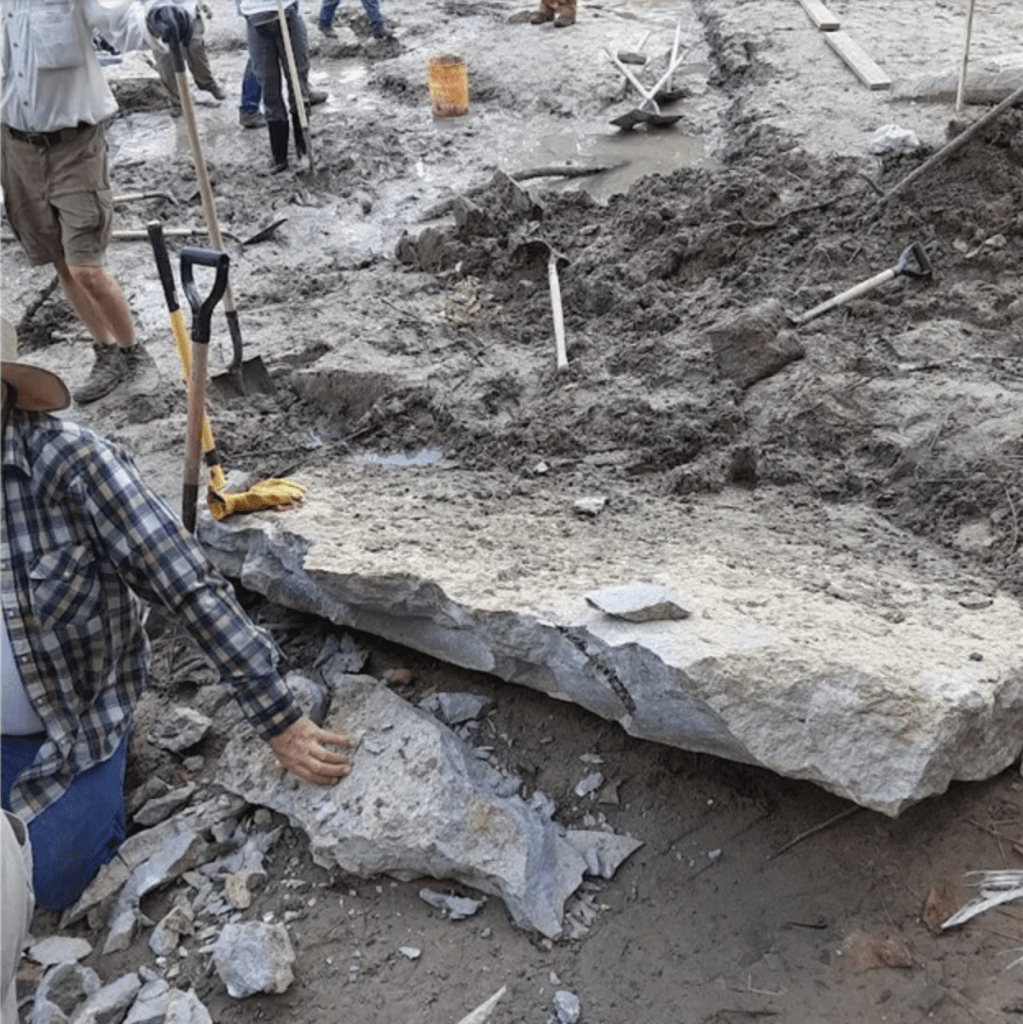
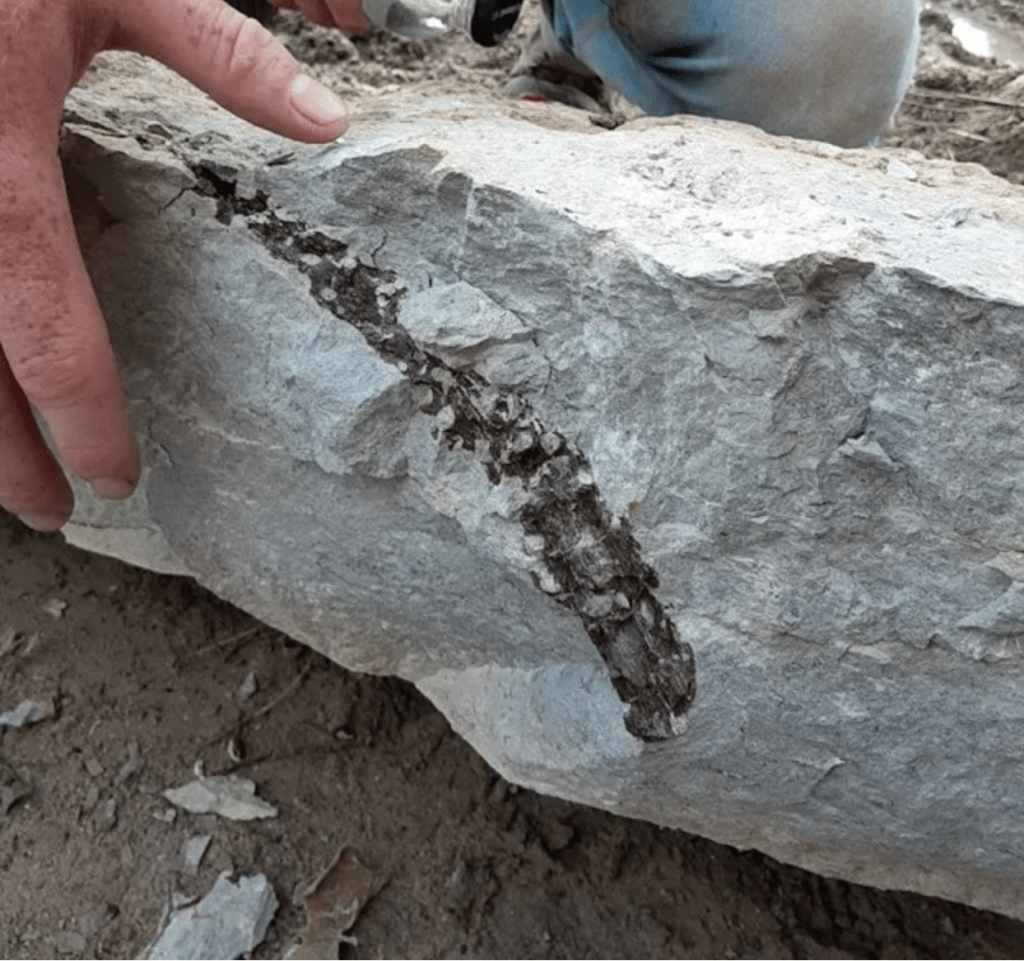
Rakowsky does not provide any in situ information about the composition of the rock or the specific layer in which the fossil was recovered, nor does he provide any information about who made the identification or how/why they did so. By looking at the fossil, its clear that it does not resemble a Stigmaria. the markings on Rakowsky’s fossil vary in composition and are inset beneath and throughout the specimen at varying and irregular depths, while the surface features of Lepidodendron are generally uniform in their distribution and do not extend into the bark. (Figs 2-3) These surface features strongly resemble Teredolites, trace fossils composed of preserved tunnels or burrows left in a borable material (Villegas-Martin et al., 2012) When shown images of Rakowsky’s find, this is what paleobotanist Dori Contreras positively identified them as.5 Additionally, photographs were provided to Dallas Paleontological Society member Gerald Bogan, who in turn provided photographs of Cretaceous driftwood covered in Teredolites formed by Martesia bivalves that match Rakowsky’s find nearly identically.6 (Fig. 4)
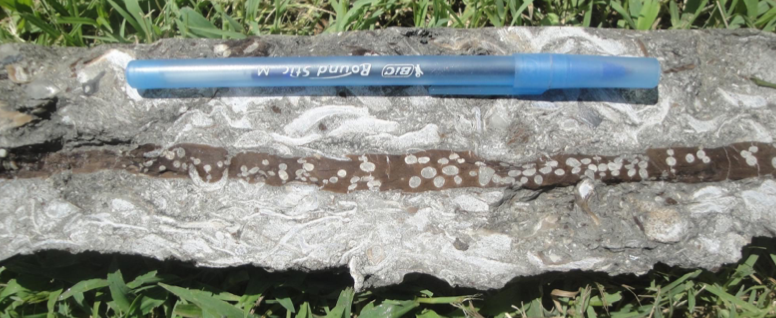
This type of find falls entirely within conventional geochronology and would be an expected find given the Cretaceous environment of the Paluxy.
This wouldn’t be the first time that Baugh and his team have mistaken trace fossils for anomalous paleontological finds at the McFall site. In 1982, near the beginning of Baugh’s involvement with the Paluxy, he presented a team of researchers with photographs of “…his ‘best’ human footprint, freshly exposed and in pristine condition…” (Hastings, 1985, p.7) The researchers were able to identify parallel burrow cast ridges that revealed the find to be a bed of invertebrate Thalassinoides tunnels, another type of burrowing trace fossil caused by the movement of marine organisms. These burrows have actually been found in abundant quantities throughout the McFall ledge site, where both Baugh’s original 1980s excavation and Rakowsky’s 2021 excavation took place. (Godfrey, 1985, p.35) While both the 1982 Thalassinoides and the 2021 Teredolites are genuine fossils that can help us understand more about the Paluxy’s paleoecology, they don’t demonstrate the kind of geochronological inconsistency that Rakowsky and other suggest they do – nor do the other alleged Paluxy Stigmaria.7
The 1987 Stigmaria (Baugh, 1989; Helfinstine & Roth, 2007)
Carl Baugh never published any professional or technical reports of his work in the scientific literature. The best source that comes the closest to a pro-anomalistic technical treatment of the claimed Paluxy anachronisms is Helfinstine and Roth’s 2007 report Texas Tracks and Artifacts. They note that in 1987 a “coalified” Lepidodendron root was recovered by Baugh and his team in June of that year at a western excavation area of the McFall site.8 This branch was claimed to be “polystrate”, being found in a marl layer and extending into an upper and lower limestone layer – thus the fossil was not only supposedly out-of-place, but also shows a peculiar formation of limestone, given that all three layers would have to be deposited rapidly to encase the branch. (p. 29-31) However, the authors don’t provide any documentaiton for this find – they provide a drawing of what they say the root looked like in situ, (p. 31) but do not specify how they identified the layers as limestone or to what extent the marl was lithified. “Marl” can often refer to a loose, unconsolidated sedimentary soil that is composed of clay and lime – it is loose, crumbly, and earthy, with a consistency similar to thick mud or silty clay. (Donovan & Pickerill, 2013; Karrow, 2010) It can form in rivers where limestone is present (like the Paluxy) due to calcium leaching, can incorporate modern organisms, and can vary in lithification based on moisture and compactness, mimicking limestone and marlstone that were deposited millions of years ago. A photograph provided by Baugh in his 1989 dissertation (p. 366) seems to suggest that this misidentification may have taken place. (Fig.5)
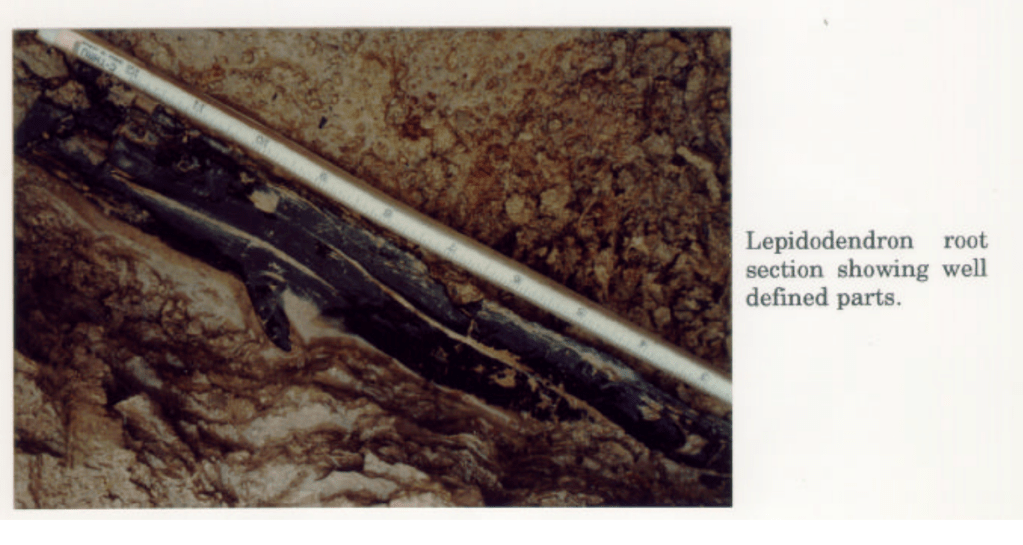
The branch not only does not resemble a Lepidodendron in any way but looks fairly modern and appears to be resting in wet, loose mud that has settled in several gaps on its surface. As opposed to the 2021 find, which was clearly inset in a stone matrix, the case is not so clear with the 1987 find. Additionally, the branch seems to be black or very darkly colored, with Helfinstine and Roth likely using the color as a diagnostic since Lepidodendron is often found in coal beds. However, if this were a modern branch resting in wet, unconsolidated marl, this discoloration is exactly what one might expect to see. Wood can easily take on a dark or black appearance when it becomes water-logged or begins to rot, and the mineral-rich water and saturated mud of the Paluxy provide just the ingredients necessary for this type of discoloration to occur. (Fig.6, Fig. 7)
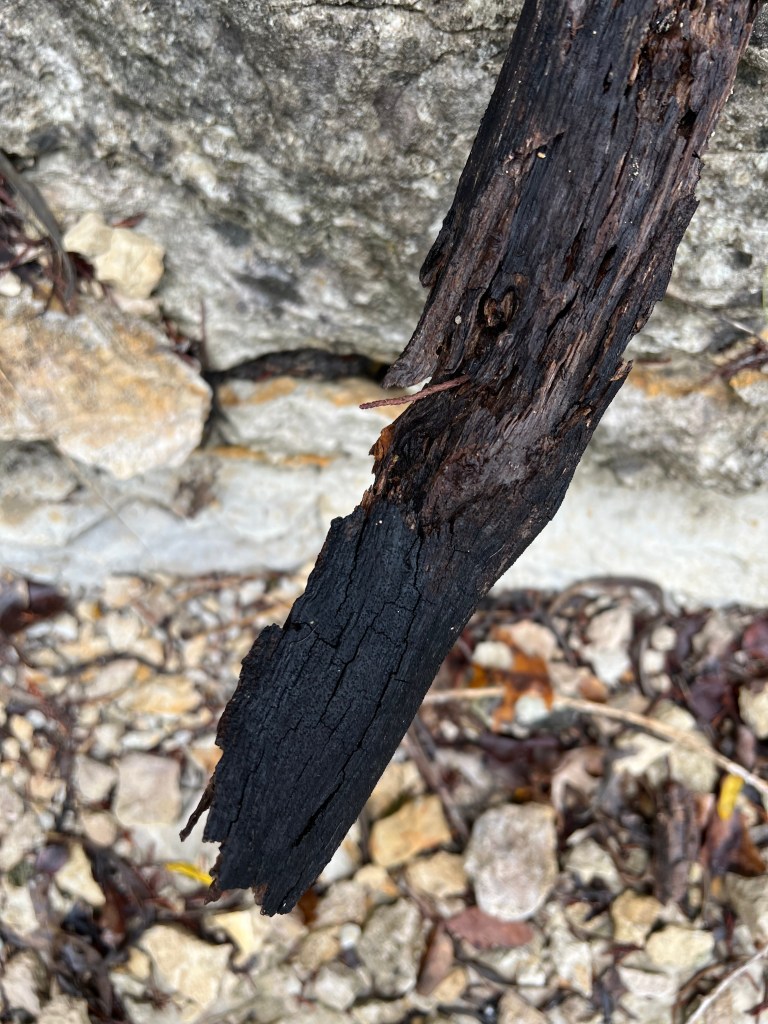

While the fossil found by Baugh and his team could easily be a genuine piece of carbonized Cretaceous wood, there’s no reason to believe that it is a Lepidodendron, especially given the lack of documentation and other quality issues with Helfinstine and Roth’s report that mirror Baugh’s history of unsound field identifications.9 For example, they state that the branch was found between and extending into “Cretacious” limestone. (p.29) They state that the branch was positively identified as a Stigmaria “…by Michael Rhineheart, who had the identification confirmed by the curator emeritus of the Gilcrest Museum of Natural History in Oklahoma City.” (p. 29) Why Mr. Rhineheart was qualified to make the identification is not discussed, and there is no Gilcrest Museum of Natural History in Oklahoma City, Oklahoma. The only notable natural history museum in Oklahoma City that I could find is the Sam Noble Oklahoma Museum of Natural History – however, its former name was the Stovall Museum of Science and History, not Gilcrest. There is a Gilcrease Museum, formerly known as the Gilcrease Institute, but it is located in Tulsa and is a humanities museum dedicated to art, history, and culture, not natural history. (Gilcrease Museum, n.d.)
The 1989 Stigmaria (Baugh, 1992; Helfinstine & Roth, 2007)
Helfinstine & Roth (2007, p.39), along with Baugh (1992, p. 104), display a photo of the 1989 find in their publications. (Fig. 8)
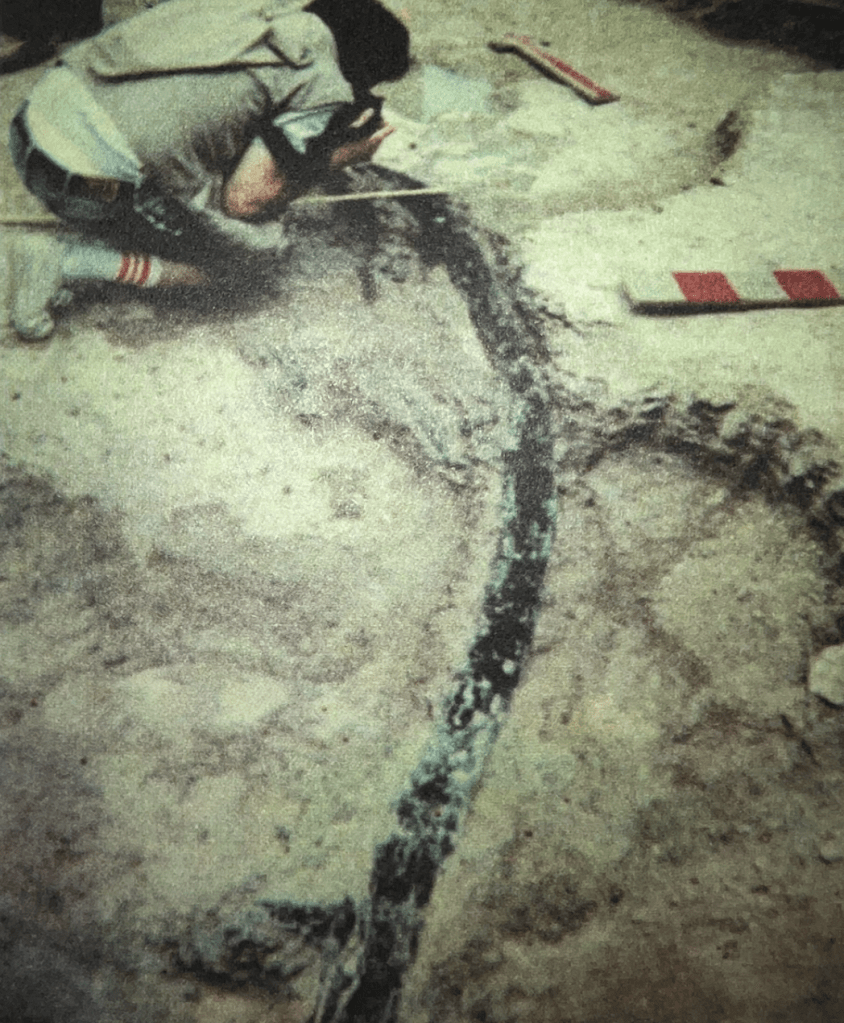
Even less information is provided for this find, leaving readers left to speculate what the find might be based only on a photo that is nearly half a century old. At first glance, there’s no reason to assume the find is a Lepidodendron – there’s no documentation that would indicate it is, and none of the characteristic traits of Lepidodendron that have been noted stand out in the photo. Unlike the 1987 find, this one does appear to be situated within the rock matrix. A more conventional interpretation might be available if the find were found to bear a resemblance to a known Cretaceous plant, which it does. As was discussed above, the Paluxy Valley was once a marine shelf of a shallow ocean situated near a low-diversity conifer forest that, according to Winkler and Rose (2006) was populated by some trees that reached over 20m (65.6ft) tall. In 2006, the Paleontological Society of Korea (PSK) published a paper concerning excavations that had taken place at Jones Ranch in Hood County, Texas, approximately 10mi from Glen Rose. (Axsmith & Jones, 2005; Winkler & Rose, 2006) There, a massive deposit of sauropod Titanosauriformes fossils (the greatest abundance of sauropod bones ever found in Texas at one location) was found together with several plant fossils in the Twin Mountains Formation, an Early Cretaceous layer that rests just below the Glen Rose Formation (both representing environments as they were approximately 100-115 million years ago). The area excavated is detailed in a quarry map (p. 81) that contains a long, curving conifer branch in the mid-western half similar in appearance to Baugh’s find, being nearly the same length.
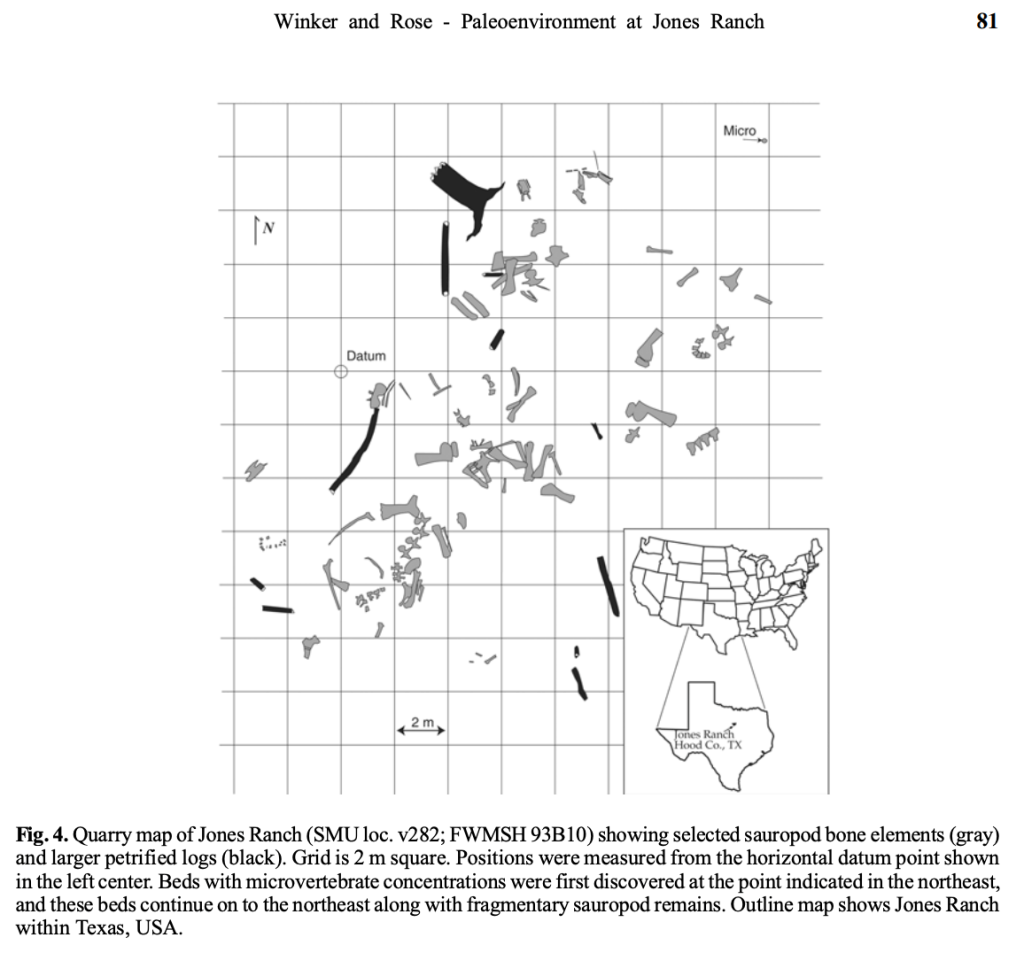
Of course, there’s no way of knowing what Baugh uncovered, but precedent exists for interpreting it along these lines as opposed to flipping all of geology on its head – especially when the burden of proof for the find actually being a Stigmaria hasn’t been met.
CONCLUSION
Across all three reported out-of-place arborescent lycophytes in the Cretaceous rock of the Paluxy River, the same core issues emerge: incomplete documentation, lack of reliable identification, and the absence of any professional publications at the time of the supposed discoveries. Based on the available information, the 1987 find likely represents a modern branch embedded in unconsolidated marl, while the 1989 and 2021 finds are more likely to be legitimate fossils that fit within the established geological timeline. None of these discoveries pose a significant challenge to current geological or evolutionary theories. However, they do underscore the Paluxy River’s peculiar reputation for producing fossil claims that spark controversy. As these types of reports continue to surface, they warrant further careful investigation to ensure that their true nature is accurately understood and documented.
Footnotes
- It should be noted that the work of Loma Linda University (a young-Earth creationist college) and paleo-researcher Glen Kuban during the 1970s and 1980s had already demonstrated that the oblong tracks in the river were actually metatarsal dinosaur tracks, and not human tracks, when the emerging young-Earth creationist scene was using them as examples of geological anomalies. Their work eventually caused modern mainstream creationist groups to stop supporting the idea that there are human tracks in the Paluxy River. (Creation Ministries International, n.d.; Hastings, 1988; Lacey & Hodge, 2020; Kuban, 1986; 2022b; Morris, 1986; Neufeld, 1975)
- Carl Baugh has claimed a number of advanced degrees that have been shown to be granted either by paid-for unaccredited diploma mills or wholly made-up schools. In regard to field proficiency, Baugh has attempted to name the human tracks he claims to have discovered as a new genus/species after himself (Humanus baughanthropus), possibly irrevocably damaged the only dinosaur bones ever found in the Paluxy River by applying plaster directly to them (after misidentifying them as mammoth remains), and has been observed carving outlines of human footprint-like shapes into the soft marl of the Paluxy River before claiming to have uncovered them. (Kuban, 2022a; 2022b)
- Datillo et al. (2014), Kuban (n.d.) and North Texas Fossils (2023) provide the following survey of regularly uncovered organisms from the area: (a) echinoids (i.e., Salenia texana); (b) cephalopods/ammonites; (c) bivalves, oysters and round clams (i.e., Texigraphaea, Neithea, Lima wacoensis); (d) steinkerns of snail shells (i.e., Tylostoma, Anchura); (e) regular round and heart urchins; (f) algal Porocystis; (g) Arenicolites worm tubes thought to be Serpulidae in origin.
- G. Kuban, personal communication, September 6, 2024
- D. Contreras, personal communication, August 14, 2023
- G. Bogan, personal communication, August 14, 2023
- Interestingly enough, the 2021 find could have been argued to have been a Lepidostrobus (the “cones” or fruit of Lepidodendron) based on their superficial resemblance to the find. It would have been a much easier case to make, and anyone familiar with general paleontology wanting to make that case would have likely gone with that instead, indicating that whoever made the original identification was not well qualified to do so. (Dilcher et al., 2005; Oplustil & Beck, 2009)
- See Datillo et al. (2014) and Kuban (1985) for maps of the river that include the McFall sites.
- In addition to the issues discussed above, such as misidentifying Acrocanthosaurus bones as mammoth bones, Thalassinoides as human footprints, and an elongate rock found in loose gravel as a human finger, Baugh has also interpreted serpulid worm tube burrows to be fossilized worms, fossil turtle remains (Chelonioidea) to be human remains, a sheepshead fish tooth to be a human tooth, a taxidermied fish to be a recently deceased plesiosaur, and even a natural iron oxide deposit at the McFall site as a piece of fossilized wood. (Hastings, 1985, p.6; 1995; Kuban, 2006; 2007; 2012)
REFERENCES AND FURTHER READING
Ames, E. (2012, July 26) Hidden in Plain Sight: A Springtime Brazos Flood, 1908. Baylor Digital Collections Blog.
Axsmith, B. J. & Jacobs, B. F. (2005) The Conifer Frenelopsis ramosissima (Cheirolepidiaceae) in the Lower Cretaceous of Texas: Systematic, Biogeographical, and Paleoecological Implications. International Journal of Plant Sciences, 166(2), 317-337.
Baugh, C. E. (1989) Academic Justification for Voluntary Inclusion of Scientific Creation in Public Classroom Curricula, Supported by Evidence that Man and Dinosaurs were Contemporary [Doctoral dissertation, Pacific College of Graduate Studies].
Baugh, C. & Wilson, C. (1992) Footprints and the Stones of Time: Scientific Evidence that Man and Dinosaurs Walked the Earth Together. Hearthstone Publishing.
Bengston, S. (1985) Taxonomy of Disarticulated Fossils. Journal of Paleontology, 59(6), 1350-1358.
Bosse, P. (2018) The Prelude to the Great Flood of 1908. Flashback: Dallas.
Chadwick, A. V. (1987) Of Dinosaurs and Men. Origins, 14(1), 33-40.
Creation Ministries International (n.d.) Arguments we think creationists should NOT use.
Datillo, B. F., Howard, S. C., Bonem, R. M., Farlow, J. O., Martin, A. J., O’Brien, M., Blair, M., Kuban, G. J., Mark, L., Knox, A. R., Ward, W. P., Joyce, T. (2014) Stratigraphy of the Paluxy River Tracksites in and around Dinosaur Valley State Park, Lower Cretaceous Glen Rose Formation, Somervell County, Texas. New Mexico Museum of Natural Science and History Bulletin (62).
Dilcher, D. L., Lott, T., Axsmith, B. (2005) Fossil plants from the Union Chapel Mine, Alabama. In R. J. Buta, A. K. Rindsberg, and D. C. Kopaska-Merkel (Eds.) Pennsylvanian Footprints in the Black Warrior Basin of Alabama: Alabama Paleontological Society Monograph No. 1. Alabama Paleontological Society.
Donovan, S. K., Pickerill, R. K. (2013) On marls and marlstones. Bulletin of the Mizunami Fossil Museum, 39, 127-128.
Edmonds, N. J. (2025) Anomalous Paleontology: A catalog of “paleo-anomalies” claimed to have been recovered from the Paluxy River (Glen Rose, Texas). Manuscript in progress.
Farlow, J. O., O’Brien, M., Kuban, G. J., Dattilo, B. F., Bates, K. T., Falkingham, L. P., Rose, A., Feels, A., Kumagai, C., Libben, C., Smith, J., Whitcraft, J. (2012) Dinosaur Tracksites of the Paluxy River Valley (Glen Rose Formation, Lower Cretaceous), Somervell County, Texas. In H. Hurtado, F. T. Fernandez-Baldor & J. I. C. Sanagustin (Eds.) Proceedings of the V International Symposium about Dinosaur Paleontology and its Environment (pp. 41-69). International Conference on Dinosaur Paleontology and its Environment.
Gilcrease Museum (n.d.) About: Tulsa’s Museum.
Godfrey, L. R. (1985) Footnotes of an Anatomist. Creation/Evolution Journal 5(1), 16-36.
Hastings, R. J. (1985) Tracking Those Incredible Creationists. Creation/Evolution Journal, 5(1), 5-15.
Hastings, R. J. (1988) The Rise and Fall of the Paluxy Man Tracks. Perspectives on Science and Christian Faith, 40(3), 144-154.
Hastings, R. J. (1995) A Tale of Two Teeth, or, The Best of Teeth, the Worst of Teeth. Creation/Evolution Journal, 15(1), 1-14.
Helfinstine, R. F. & Roth, J. D. (2007) Texas Tracks and Artifacts: Do Texas Fossils Indicate Coexistence of Men and Dinosaurs? (Rev. Ed.) R&J Publishing.
Karrow, P. (2010, December 24) Marl. University of Waterloo.
Kuban, G. J. (1986) Elongate Dinosaur Tracks [Paper presentation]. First International Conference on Dinosaur Tracks and Traces, Albuquerque, New Mexico.
Kuban, G. J. (2006) Alleged Cretaceous “Human Hand Bones”. paleo.cc
Kuban, G. J. (2007) Lake Erie Sea Monster? paleo.cc
Kuban, G. J. (2012) An Alleged Cretaceous Finger. paleo.cc
Kuban, G. J. (2013) The Alvis Delk Print: An Alleged Human Footprint on a Loose Rock. paleo.cc
Kuban, G. J. (April, 2022) A Matter of Degree: An Examination of Carl Baugh’s Alleged Credentials. paleo.cc
Kuban, G. J. (May, 2022) On the Heels of Dinosaurs: A Brief History of the Paluxy “Man Track” Controversy. paleo.cc
Kuban, G. J. (n.d.) Common Fossils in the Glen Rose Limestone. paleo.cc
Lacey, T. & Hodge, B. (2020, October 23) Humans with Dinosaurs Evidence. Answers in Genesis.
Morris, J. D. (1986, January 1) The Paluxy River Mystery. Institute for Creation Research.
Neufeld, B. (1975) Dinosaur Tracks and Giant Men. Origins, 2(2), 64-75.
North Texas Fossils (2023, February 24) Glen Rose Formation (c. 108-113 mya).
Oplustil, S. & Bek, J. (2009) Some Pennsylvanian aborescent lycopsid cones and their microspores from the British coalfields. Bulletin of Geosciences, 84(2).
Rakowsky, A. (2022, October 15) Tracking Humans on the Cretaceous Rocks of Texas’ Paluxy River. The Kolbe Center for the Study of Creation.
Rothwell, G. W. & Erwin, D. M. (1985) The Rhizomorph Apex of Paurodendron: Implications for Homologies among the Rooting Organs of Lycopsida. American Journal of Botany, 72(1), 86-98.
Texas Parks and Wildlife Department (2019) Interpretive Guide: Dinosaur Valley State Park.
Villegas-Martin, J., de Gilbert, J. M., Rojas-Consuegra, Belaustegui, Z. (2012) Jurassic Teredolites from Cuba: New trace fossil evidence of early wood-boring behavior in bivalves. Journal of South American Earth Sciences, 38, 123-128.
Winkler, D. A. & Rose, P. J. (2006) Paleoenvironment at Jones Ranch, an early Cretaceous Sauropod quarry in Texas, U.S.A. Journal of the Paleontological Society of Korea, 22(1), 77-89.
 The Chardin Collective
Leave a comment