
“I doubt if there is any single individual within the scientific community who could cope with the full range of (creationist) arguments without the help of an army of consultants in special fields.” British geologist Errol White, as quoted in Vance Ferrel’s 2006 Science vs Evolution (p.67)
The Creation Collectanea is a project designed to serve as this consultancy, a one-stop online research tool for anyone looking for information on biblical or scientific Young-Earth Creationism.
“Collectanea” is a Latin word that refers to a collection or gathering of writings. The Creation Collectanea is proposed to be a complete and broad-sweeping research aid that indexes all positions of biblical and scientific creationism that provides commentary on them from an objective and faithful perspective. Several of these indexes have existed over the years (i.e., the Evolution Resource Directory, TalkOrigin’s Index to Creationist Claims, etc.), although we’ve found that many of them are relics of the creation-evolution heyday of the mid-2000s, hold philosophical biases, or are difficult to use for research in the present because they contain a number of dead links. For example:
- The Evolution Resource Directory – Despite sounding great on the surface, the website itself regrettably leaves much to be desired. The website has an interesting search function utilizing side menus and hyperlinks that are hosted on randomly dispersed pages of mixed-bag links to related topics but doesn’t integrate them or provide any explanation on how they’re related – that, and most of the pages rely on Mark Isaak’s Index to Creationist Claims and don’t offer much in the way of original content.
- Index to Creationist Claims – Mark Isaak’s Index is, at present, perhaps the largest index of responses to young earth creationist arguments. It was even published in book form by the University of California Press in 2007. While an incredibly useful resource that is still used today, it suffers from its age, since it hasn’t been updated since 2006. The layout of the index feels outdated, and has become a casualty of massive “link rot” – a large number of the links to cited sources are broken, non-existent, or inaccessible, making checking or providing citations difficult. The entries in the index can be ruthlessly efficient – they offer the minimum necessary response and often only offer one or two sources. Additionally, some items can inaccurate by bias – for example, entry CA662 says that the Church used to teach that the Earth was flat and that the Church had a negative reaction to heliocentrism based on its hostility towards science in general (when neither of these is accurate to history). It also sometimes cites sources that are not part of the mainstream and do not accurately characterize the majority of YECs. For example, entry CA001 cites Sun Myung Moon for making the clam that evolution is the foundation of an immoral worldview. Given that Moon is the head of a religious movement that has been characterized as a predatory cult, this can come across as lite poisoning of the well, especially when more well-known individuals and organizations in the creationist sphere already make this argument.
- The National Center for Science Education – The National Center for Science Education has been described as “…the United States’ ‘leading anti-creationist organization’.” They have served as key players in responding to creationist claims since their founding in 1982, most notably for aiding the plaintiffs in the 2005 Kitzmiller vs. Dover case. Despite an exemplary record in educating the public about misconceptions about the theory of evolution and a high reliability rating, they tend towards scientism in their publications, and mix science and politics in a way that may be off-putting to outsiders, painting creationists and “climate science deniers” with the same dismissive brush as those outside of reason who just want to deny the facts. (We aren’t endorsing any scientific or political opinion concerning climate change here. We tend to defer to the consensus on issues outside of our scope, but just wanted to make the point that a well-meaning organization may make it difficult for their opponents to be open to their message, which is exactly how Joshua Youngkin of Evolution News described the situation, criticizing NCSE’s failure to differentiate between outright denial of demonstrable climate change data and unreasonable climate change alarmism.)
- Young Earth Creation Science Argument Index – This index is a webpage of Greg Neyman’s Old Earth Ministries. It had the aim of listing all young earth creationist claims and providing rebuttals to them. It sadly does not feature very many responses, has a large number of completely empty sections, suffers from link rot, and does not appear to have been updated for the last several years.
The lack of this type of resource is noted by many who leave Young Earth Creationism and struggle to put together a massive amount of material on their own from all over the internet into a new, cohesive narrative. This project aims to plug that gap, and provide up-to-date interactive and comprehensive answers to specific claims.
The first version of the Collectanea is currently underway, and is expected to be live sometime in early 2025 if everything remains on schedule (although contributions from volunteers and team members may speed up this timeline). At the time of writing (Summer 2024), we have reviewed 15 books, 105 articles from YEC refereed journals, 4 presentations, 18 general articles, and 14 web pages and itemized their arguments (including those used for our human-dinosaur coexistence project, Paleodragonology).
The entire index is divided into ten sections, four on biblical creationism and six on scientific creationism, each with their own accessible menus. The first four focus on where YECism fails at its foundation (i.e., a literal reading of the Bible), the theology and philosophy that result from that reading, the morality of YECism and the negative morality leveled at evolution, and the writings of the Church Fathers, saints, and the role Church history has to play in the modern dialogue.

1. Biblical Creationism – This section deals with the Scriptural foundation of Young-Earth Creationism specifically regarding narrative, hermeneutics, and exegesis, from Genesis to Revelation.

2. Theology and Philosophy – This section covers the basic theological and philosophical positions that come from a Young-Earth reading of the Bible.

3. Morality and Ethics – A number of claims about how people should behave and how they relate to morality arise from the theological and philosophical perspectives based on biblical Young-Earth Creationism. A number of negative moral claims are ascribed to evolution by young-Earth advocates.

4. Church History, Church Fathers, and the Saints – Many of the writings of the authorities of the Church are involved in creation-evolution dialogue. This section goes over how young-Earth proponents use them and what their proper context is.
The other six sections of the Collectanea deal with creation science claims – the scientific justifications many YECs give for their beliefs, the scientific contradictions that supposedly debunk all deep time models including evolution, etc.
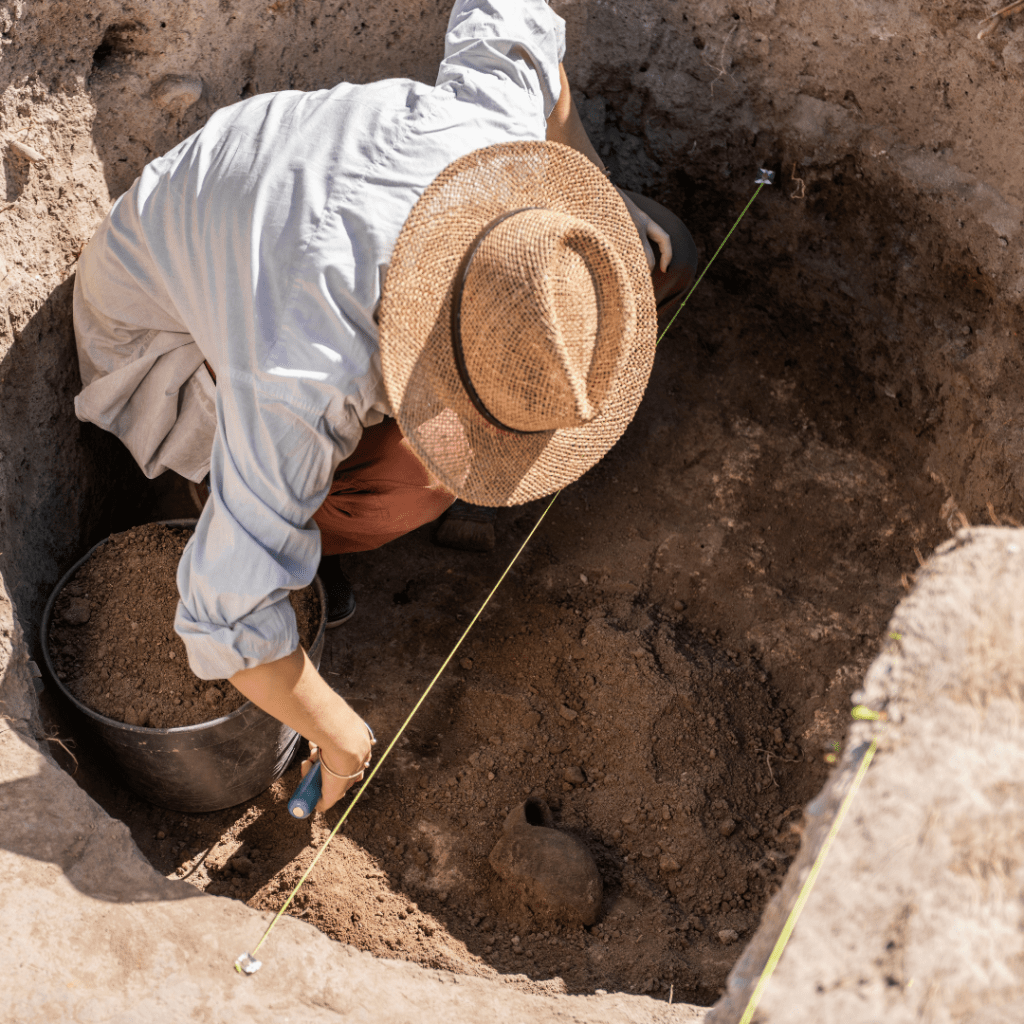
5. Anthropology, Archaeology – Catalogs the claims that surround the study of humanity, human behavior, biology, culture, society, linguistics, etc. Human fossils, prehistory and genetics are included here as opposed to other sections to keep things convenient and consistent.

6. Astronomy, Cosmology, Planetary Science – Catalogs the claims surrounding the study of space, celestial objects, and the physical universe as a whole. For the sake of convenience, extra-planetary geology is considered here rather than under Geology, as are planet-wide topics on Earth, like it’s magnetic field.

7. Biology, Ecology, Zoology – Life sciences, plants and animals from single cells upward and their populations. Items below the level of the cell like DNA are catalogued under Chemistry and Physics.

8. Chemistry, Physics – The properties and behavior of matter, the changes they undergo, and the laws that describe and govern these changes.

9. Geology, Paleontology – The Earth, rocks and fossils, along with the processes that change them over time. Claims about late surviving dinosaurs are not cataloged here, but rather have their own project – Paleodragonology.

10. Oceanography, Limnology – A surprising number of Young-Earth arguments have to do with bodies of fresh or saltwater, such as oceans, lakes, ponds, reservoirs, streams, rivers, wetlands, estuaries, etc. Those are housed here.
 The Chardin Collective
Leave a comment